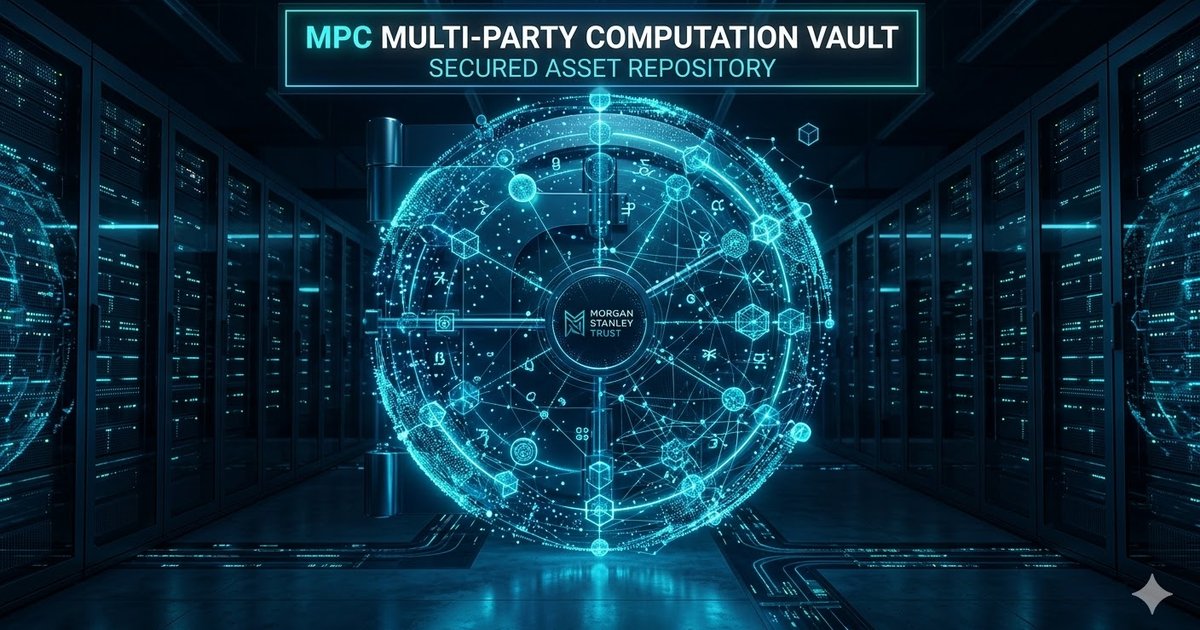
While everyone was busy arguing whether Bitcoin is a "bubble" or a "hedge," a titan decided to end the debate. Morgan Stanley just made a massive move. They didn't buy an ETF, and they didn't just partner with some trendy startup. They filed to build their own custody bank from scratch. Their own tech, their own infrastructure, their own license.
And if you think this is just "another bank doing crypto," look at the numbers. In January 2026, stablecoin networks processed $10.4 trillion. To put that in perspective, Visa handles about $1 trillion a month. That means crypto-dollars are already moving 10x faster than the world's biggest payment giant.
This isn't a fluke. It's the sound of the financial tectonic plates shifting.
The "Iron Safe" Problem
Let's be real: how did banks used to think about security? Big, heavy metal boxes called HSMs (Hardware Security Modules). Banks have used them for 30 years to protect PIN codes and credit cards. But in crypto, HSMs are a massive headache. If you want to scale to millions of users, you literally have to buy millions of these physical boxes. Plus, if that box is stolen or hacked? The key is gone. Game over.
In the "early days" — we're talking pre-2018 — institutional custody was even crazier. They were literally printing seed phrases on paper and locking them in physical vaults. One dishonest security guard and your entire market cap vanishes.
The Magic That Changed Everything
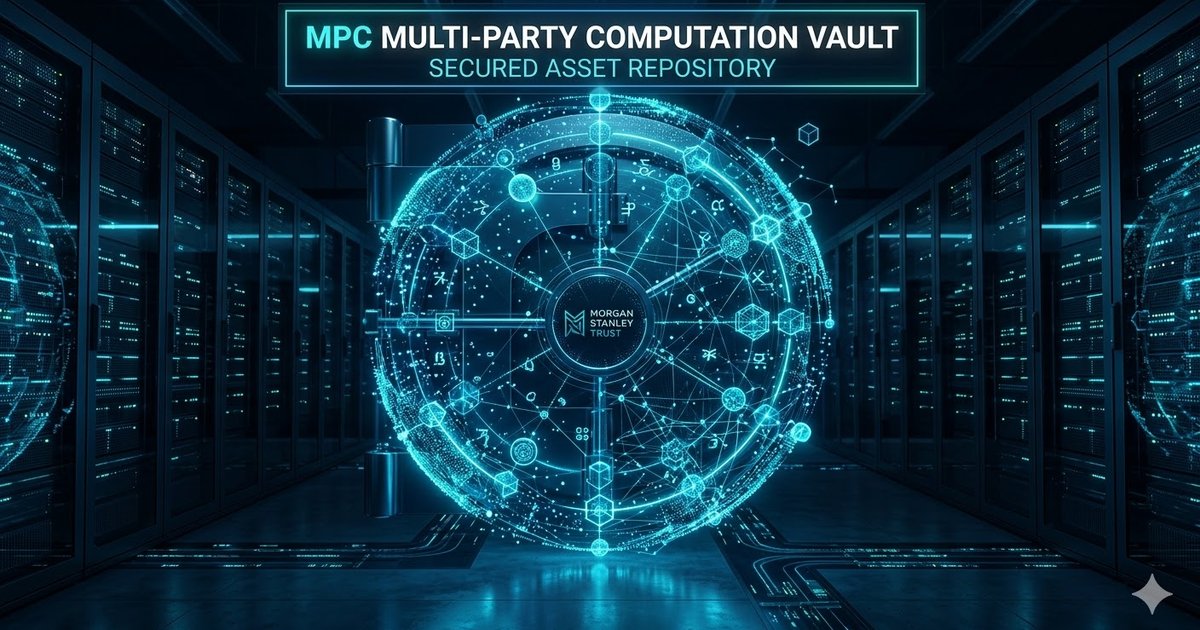
Enter MPC (Multi-Party Computation). This is the "secret sauce" that allowed Morgan Stanley to say, "Okay, now we can actually scale this."
Think of your private key not as a single physical key, but as a digital puzzle. The pieces (we call them "shares") are scattered across the world. One is with you, one is with the bank, and one is in a backup cloud. On their own, these pieces are just digital junk. But when you need to sign a transaction, they "talk" to each other mathematically without ever showing their piece to anyone else. The full key never actually exists in one place. That's the modern gold standard. No more "single point of failure."
Why Morgan Stanley Is Going All-In
They are creating a National Trust Bank. This is a clever legal move. This kind of bank doesn't give out car loans or take deposits from the public. Its only job? Holding and managing assets.
Why does this matter? Because it gives them one federal license for all 50 U.S. states. No more chasing local regulators in every corner of the country. They want to be the "back-office" for those trillions of stablecoin dollars. When a big fund wants to move $100 million in USDC, they don't just need a "wallet." They need a licensed custodian who carries the legal weight of a bank.
The Systemic Migration
In the last three months, 11 companies — from Circle and Ripple to Fidelity — have applied for this same license. This isn't a trend; it's a systemic migration. Wall Street doesn't see crypto as the enemy anymore; they see it as the pipes they'll use to move money for the next 20 years.
For those of us in Web3, the message is clear: the bar just got higher. MPC isn't a "cool feature" anymore; it's the entry ticket.
| Technology | Era | Weakness |
|---|---|---|
| Paper seed phrases | Pre-2018 | Physical theft, single point of failure |
| HSM hardware | 2018–2022 | Expensive to scale, location-dependent |
| MPC threshold signing | 2022–present | Key never assembled, distributed trust |
So, here's the question: would you trust your assets to the "old guard" like Morgan Stanley, or do you stick with crypto-native giants like Coinbase or Fireblocks?
— Vadim Rozov, BroLabel