The most popular advice about crypto payments starts in the wrong place. It treats acceptance as the product, when production payment infrastructure also has to observe deposits, determine confirmation, post balances, authorize withdrawals, sign transactions, reconcile records, and settle funds in fiat or crypto.
The clear enemy is fragmented vendor ownership. A checkout provider, wallet custodian, blockchain data service, payout API, ledger, and compliance tool may each work in isolation while nobody owns the complete transaction lifecycle. A useful comparison therefore covers payment acceptance, custody architecture, settlement control, ledger and reconciliation, event reliability, compliance workflows, integration effort, and commercial fit.
This list compares seven providers as operating-system choices, not interchangeable checkout tools. It includes BroLabel, BitPay, CoinGate, NOWPayments, Triple-A, OpenNode, and Alchemy Pay. The practical lesson is simple: test every vendor from deposit observation through confirmation, ledger posting, payout policy, signing, and fiat settlement. A payment gateway versus payment processor guide helps clarify the commercial distinction, but serious buyers also need to inspect what happens after checkout.
Table of Contents
- 1. BroLabel
- 2. BitPay
- 3. CoinGate
- 4. NOWPayments
- 5. Triple-A
- 6. OpenNode
- 7. Alchemy Pay
- Top 7 Crypto Payment Gateway Development Companies, Comparison
- Choose the Operating Model, Not Just the Gateway
1. BroLabel
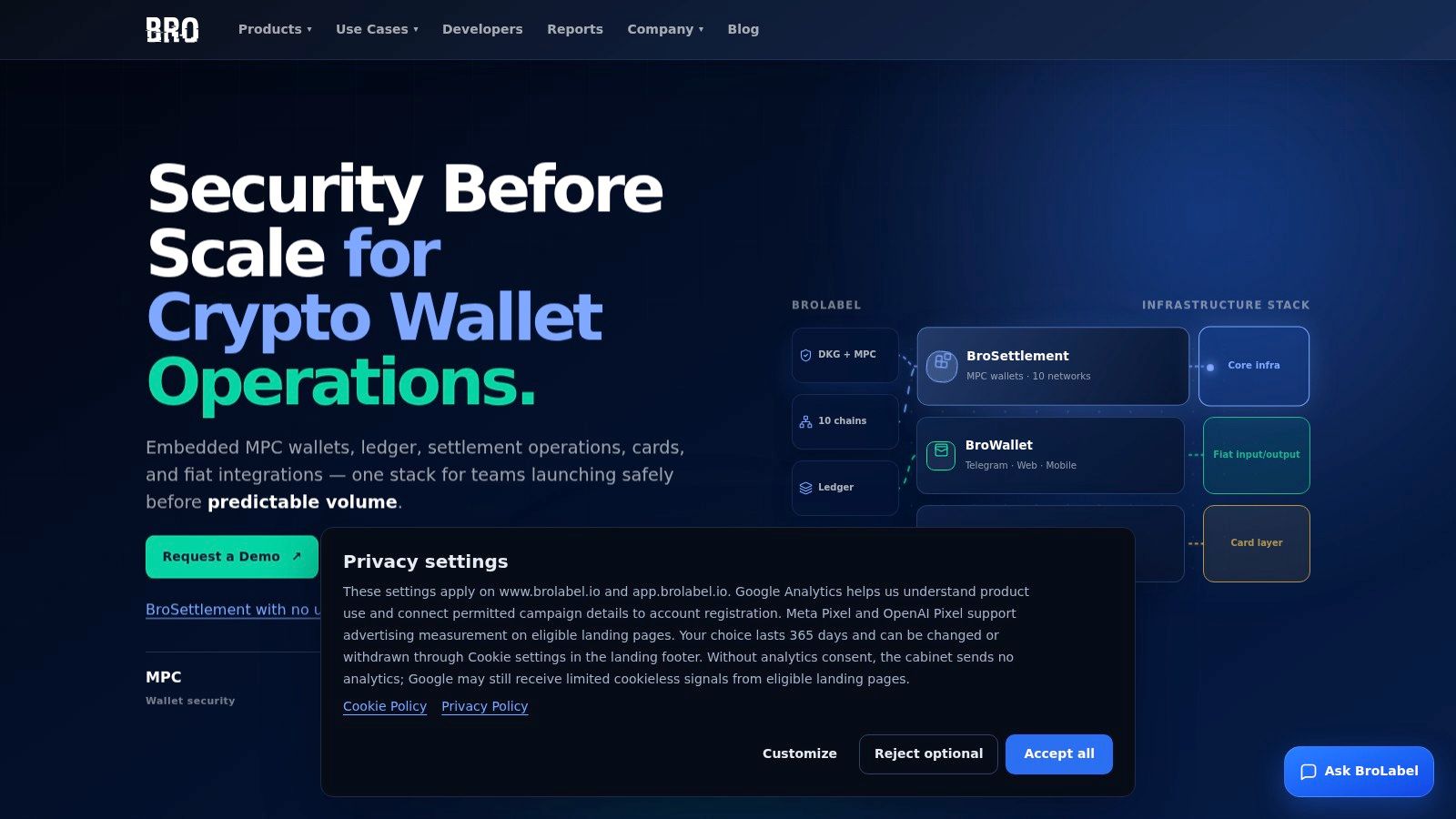
BroLabel is the strongest fit when a company needs payment infrastructure beneath its own product, rather than another hosted checkout page. Its API-first stack combines embedded wallets, network broadcast, settlement operations, an immutable operating ledger, real-time events, fiat integrations, and card capabilities. That breadth matters to founders and CTOs trying to avoid a chain of loosely connected vendors before transaction volume becomes predictable.
The central architectural choice is non-custodial MPC with DKG and 2-of-3 threshold signing. The documented MPC model requires a quorum of key shares, so no single participant can sign alone. BroLabel adds a client-controlled Co-Signer and enforced signing policies, giving the client operational control without placing the complete signing authority in one service.
Where the stack fits
BroSettlement can provide deposits, withdrawals, wallet balances, network broadcast, and reconciliation support. Embedded wallets can be modeled for users, agents, or players. For an iGaming operator, the relevant flow can include a per-player TRON or USDT deposit address, deposit.observed and deposit.confirmed events, and an operator policy decision before payout signing.
The operating ledger is equally important. A payment system should record each confirmed deposit as a double-entry posting, then reconcile the blockchain, custodian or wallet balances, bank statements, and internal ledger as separate balance sources. BroLabel's append-only ledger and event stream are designed around that operational requirement rather than treating the dashboard balance as the accounting system.
Practical rule: A payment gateway isn't production-ready until finance can explain every confirmed deposit, payout, fee, and settlement movement from source event to ledger entry.
Developers get REST APIs, OpenAPI and Swagger documentation, Ed25519 authentication, replay protection, IP allowlisting, a sandbox with simulated flows, and WebSocket events for deposits, confirmations, withdrawals, and policy outcomes. AI Agent integration can help plan flows, while AI Agent Wallets support per-agent wallets with RBAC and audit trails.
The commercial model is designed for teams that need to start before volume is certain. BroLabel promotes trial-month terms, flexible tiers, no fixed minimums or lock-in, and no upfront BroSettlement payment. Public line-item pricing isn't posted, so buyers still need a commercial conversation. BroWallet and BroCard are on the product plan, but some consumer wallet and card functions remain in development.
BroLabel is best for exchanges, neobanks, PSPs, stablecoin platforms, enterprise treasury teams, and operators that need custody controls, reconciliation, and modular integration. It is less suitable for a merchant that only wants a ready-made checkout and established processor settlement.
2. BitPay
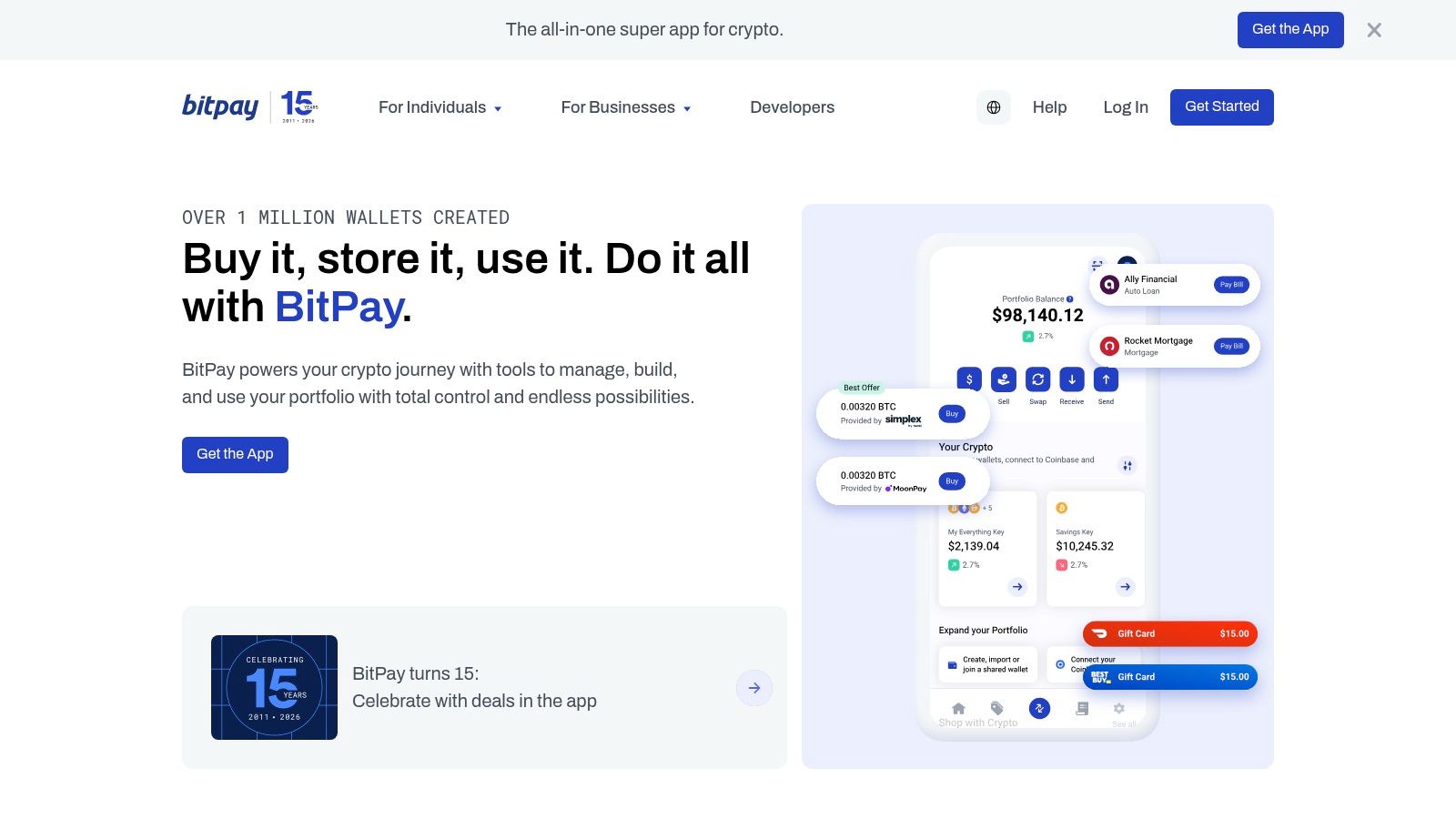
BitPay is a processor-first choice for organizations that want hosted checkout, invoices, payouts, merchant tooling, and bank or crypto settlement from an established provider. Its operating model reduces the amount of wallet and blockchain infrastructure a merchant must build directly. That can be valuable for a larger brand whose primary objective is to accept crypto without becoming a wallet operator.
The integration surface includes invoices, webhooks and IPNs, detailed payment-state changes, JSON Payment Protocol support, SDKs for multiple programming languages, refunds, payout controls, and merchant dashboards. These features put BitPay closer to a complete merchant processor than to an infrastructure layer that a product team assembles into its own payment experience.
The operating trade-off
BitPay's strength is operational familiarity. Merchant KYC, invoice lifecycle management, refunds, payouts, and bank settlement workflows can reduce the internal burden on finance and support teams. Broad coin coverage also gives merchants more pay-in options, although the available settlement assets and fiat corridors can vary by region.
The trade-off is control. A processor-centered model may expose fewer wallet-signing and ledger primitives than a modular MPC infrastructure provider. If your product needs per-user wallets, client-controlled signing policies, custom payout approval, or an internal operating ledger, you should confirm whether BitPay exposes those controls or expects the merchant to work within its processor workflow.
Commercial evaluation also needs more than a headline processing rate. Tiered processor pricing may be less attractive for teams optimizing for very low fees, and the complete economics can depend on asset, region, conversion path, settlement currency, refunds, and payout timing.
For a technical buyer, the key test is event behavior. Ask whether invoice state changes are delivered with signatures, retry semantics, stable identifiers, and enough detail for idempotent webhook handling. The first response or resource identifier should be stored, and a retry using the same idempotency key should not create a second irreversible effect.
Read BroLabel's payment gateway solution overview when comparing a processor model with a stack that exposes wallets, signing, events, and ledger functions as application infrastructure.
BitPay suits mainstream ecommerce, established brands, and PSPs that prioritize hosted payment operations and predictable merchant tooling. It isn't automatically the best choice for a platform that wants to own the payment state machine, custody policy, or reconciliation architecture.
3. CoinGate
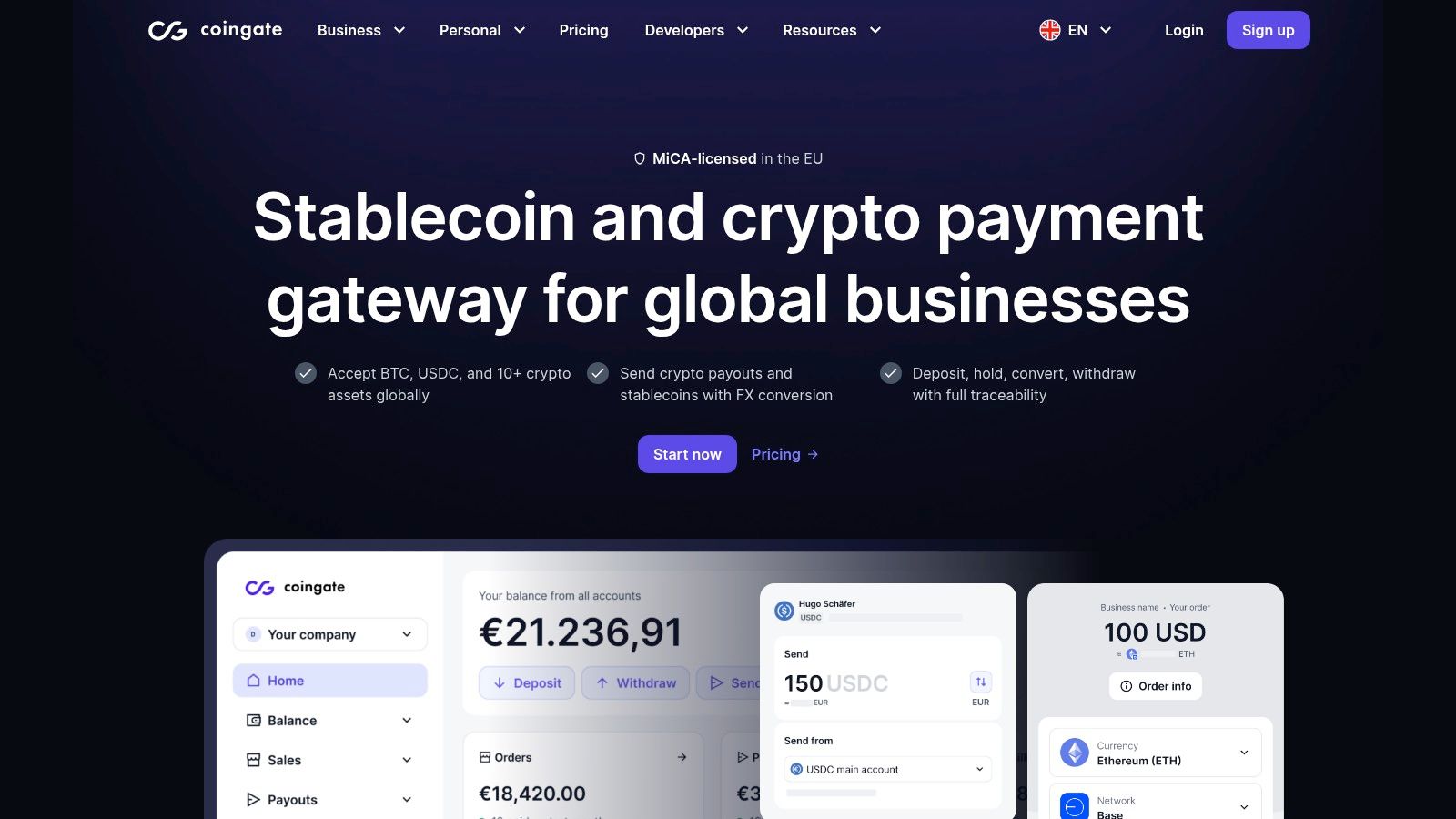
CoinGate is a practical option for teams that want a European crypto payment processor with clear standard pricing, ecommerce tooling, and a clean API. Its product sits between hosted merchant convenience and developer control. Checkout links, ecommerce plugins, recurring billing, payouts, live environments, sandbox support, and exchange-rate endpoints cover the needs of a merchant or PSP that doesn't want to build every customer-facing payment surface.
The pricing model is unusually visible among the providers in this comparison. CoinGate lists a 1% standard processing fee, with no setup or monthly fees, while conversion and certain bank withdrawals can add costs depending on the corridor. The number is useful for initial modelling, but finance teams should still request the full fee schedule for the exact assets, currencies, countries, conversions, and withdrawal paths they plan to use.
Why technical teams may prefer it
CoinGate publishes merchant and public exchange-rate endpoints, supports multiple pricing currencies, and offers a separate sandbox. That separation can reduce the risk of testing against production payment behavior. The recurring Billing API is relevant to subscription products, although recurring crypto flows still need careful handling around authorization, balance availability, refunds, and failed collection.
A clean REST API doesn't remove the need for operational design. The application still needs a payment state model that distinguishes an observed deposit from a confirmed deposit, and it needs event handlers that can safely process retries. CoinGate's live and sandbox policies may differ, so environment parity deserves explicit testing during procurement.
“A sandbox is only useful if it exercises the failures your finance and support teams will see in production.”
CoinGate is a good fit when pricing visibility and fast merchant integration matter more than client-controlled custody. It can be attractive for ecommerce operators, SaaS businesses, and PSPs that need plugins and hosted checkout alongside API access. It is a less obvious fit for a company building a wallet-led product, a treasury platform, or a payment operating system where internal ledger and signing policy are core product capabilities.
Its central trade-off is therefore not just fee level. CoinGate can shorten the path to acceptance, but the buyer may still need separate infrastructure for custom custody, transaction policy, detailed reconciliation, and platform-specific wallet models.
4. NOWPayments
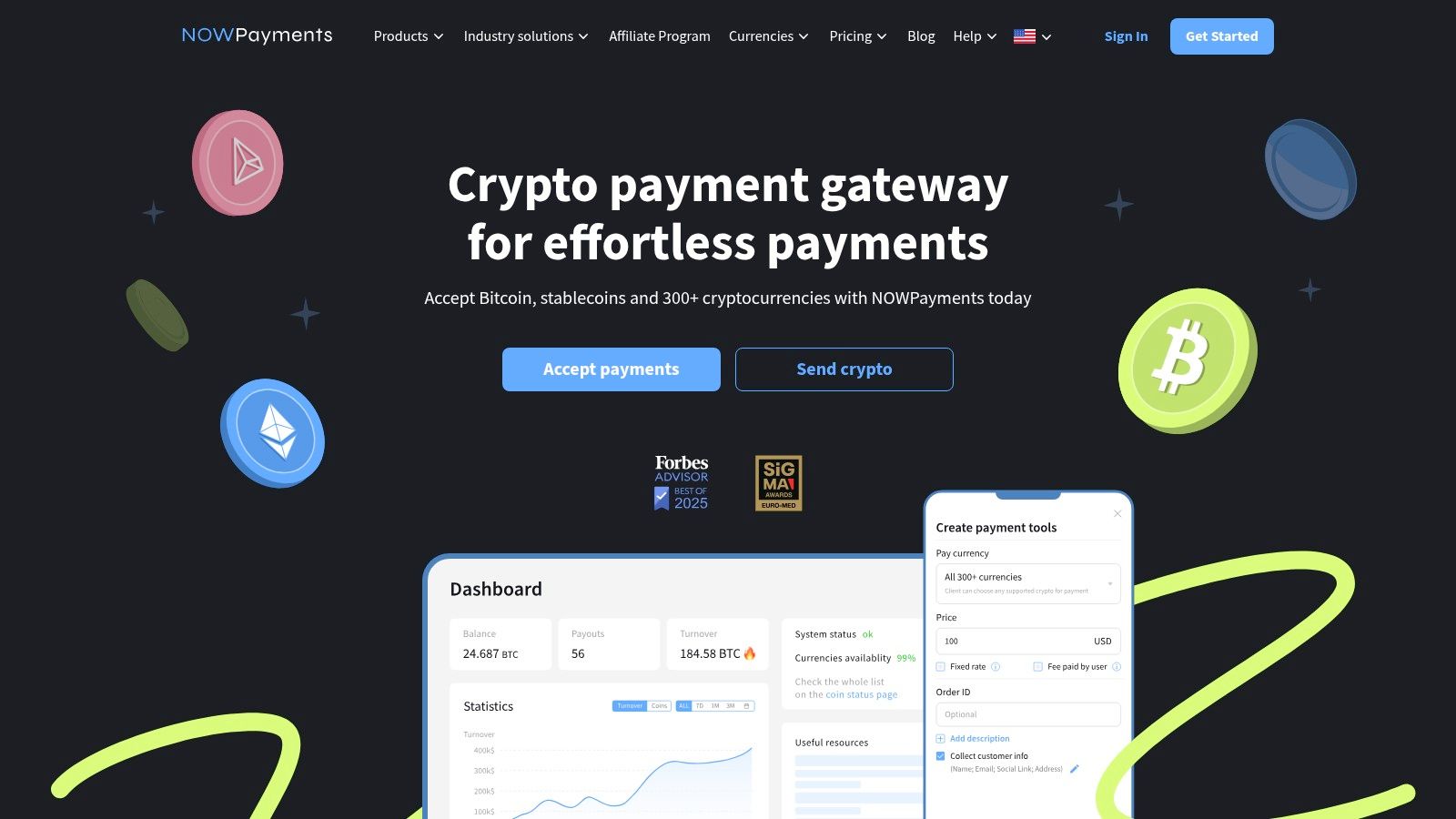
NOWPayments is built for teams that want broad crypto asset coverage with APIs extending beyond basic payment acceptance. Its surface includes Payments, Mass Payouts, Custody, Customer Management, and Recurring Payments APIs. That makes it relevant to platforms managing internal balances, merchant collections, customer accounts, and outbound payment flows in one provider relationship.
The platform also supports off-chain conversions and custody features for internal movements. This can reduce the need to broadcast every internal transfer on-chain, but it creates a corresponding requirement for clear balance ownership, transaction records, withdrawal controls, and reconciliation between internal balances and external network movements.
Pricing and platform fit
NOWPayments presents a fee breakdown across processing, conversion, and network costs. Its custody withdrawal model advertises a 0% service fee, with the network fee still applying. That distinction is important for unit economics. A withdrawal can avoid a platform service fee while still carrying network, conversion, partner, corridor, or operational costs elsewhere in the flow.
The provider is a sensible candidate for a product team that needs mass payouts or recurring collection without stitching together separate payment and payout APIs. It may also fit a marketplace or platform that maintains customer balances and wants off-chain movement for some internal operations.
The harder diligence questions concern fiat on-ramp and off-ramp costs, regional payment methods, KYB requirements, and feature availability. Partner-set fees vary by region and method, while advanced account or verification workflows may require coordination with support. A founder should model the whole transaction path, not just the advertised processing component.
Use this fiat-to-crypto payment gateway analysis alongside the provider's commercial documentation when mapping card, bank, crypto, conversion, and settlement responsibilities.
NOWPayments is strongest when a buyer wants one broad API family for payments, payouts, custody, and customer management. It is less compelling when the principal requirement is a non-custodial architecture with a client-controlled Co-Signer, a bespoke signing policy, or a ledger that becomes the company's operating record.
5. Triple-A
Triple-A is a compliance-first choice for regulated enterprises, fintechs, and PSPs that need stablecoin acceptance, global payouts, and conversion to local currencies. Its value isn't primarily the number of checkout components. It is the combination of licensing and registrations, enterprise payment coverage, treasury-oriented partnerships, invoice flows, and regulatory support.
The provider describes coverage across major regulatory markets, including MAS, FinCEN, FINTRAC, and EU CASP or PI registrations. Buyers still need to verify the exact entity, service, and corridor relevant to their programme. A regulatory presence in a market doesn't automatically transfer the provider's permissions or obligations to the merchant.
Compliance as a product boundary
Triple-A's merchant invoicing and checkout flows include automatic conversion and refund logic options. Stablecoin treasury and cross-border payment partnerships can also support enterprises that care more about settlement certainty and working-capital movement than about offering every possible token.
That focus aligns with the direction of enterprise stablecoin usage. An EY 2026 survey found that 62% of corporate respondents use stablecoins to pay suppliers across borders, while 53% accept cross-border payments from business partners. The survey also reported that 44% accept stablecoin payments from both consumers and vendors, and 26% would be willing to accept payment in stablecoins. These figures point toward supplier settlement, treasury, and business-to-business flows rather than a universal retail replacement. EY's stablecoin survey provides the underlying context.
Triple-A's commercial terms are negotiated per account, so buyers won't get a fixed public price card. That reduces pricing transparency at the shortlist stage, but it can support corridor-specific scoping. Restricted industry lists also mean eligibility should be tested before technical integration.
Triple-A is a strong fit when compliance depth, local-currency settlement, and cross-border enterprise coverage lead the decision. It may be less suitable for a developer-led product that needs embedded wallets, direct control of signing, or a heavily customized ledger and event architecture.
6. OpenNode
OpenNode is a specialized rail choice for organizations that have made a deliberate Bitcoin and Lightning Network decision. Its scope covers on-chain BTC and Lightning payments, hosted checkout, APIs, settlements, conversions, and optional automatic conversion to local currency. That narrower focus is a strength when the product needs fast BTC payment flows, but it can become a constraint when customers or treasury teams require multiple assets and networks.
The platform supports locked exchange rates and automatic conversion, which helps a merchant reduce exposure between the quoted amount and settlement. Bank transfer settlement and scheduled or fast Lightning transfers add operational options, while hosted tools and developer documentation keep the integration surface relatively focused.
A rail, not a full treasury stack
OpenNode's primary advantage is specialization. A Bitcoin-only or Bitcoin-led product can avoid paying for a multi-asset architecture it won't use. Lightning may also reduce the operational friction associated with smaller BTC payments, although the buyer still needs to evaluate liquidity, channel behaviour, settlement policy, refunds, and bank corridors.
Its limitation is equally clear. OpenNode isn't a multi-asset gateway, so a company supporting stablecoins, EVM networks, Solana, or multiple settlement currencies may need another provider. That creates the same vendor-sprawl problem this comparison began with, only in a narrower form.
The headline processing rates are presented as low, with no listed monthly minimums, but bank transfer fees and minimums can vary by corridor. Finance should therefore separate customer payment fees, conversion costs, bank settlement costs, and any operational minimums.
For teams evaluating the broader architecture, this guide to crypto payment infrastructure offers a useful contrast between a specialized payment rail and a modular stack with wallets, signing, ledger, events, and fiat integrations.
OpenNode is the right shortlist candidate when BTC and Lightning are the product requirement. It isn't the natural choice for a platform that needs multi-chain wallet provisioning, client-controlled MPC signing, per-user or per-player balances, or a unified ledger across several payment rails.
7. Alchemy Pay
Alchemy Pay is designed for companies that need crypto checkout plus fiat funding and off-ramp coverage. Its developer APIs cover payment-method discovery, supported crypto and fiat pairs, sandbox and production environments, and corridor-specific availability. The product can bridge card, bank, and local payment methods into crypto flows, which may reduce the number of separate vendors required for on-ramp and off-ramp functions.
The checkout experience supports wallet and QR flows, automatic price-protection behaviour, and partner integrations that can include Apple Pay and Google Pay. IP allowlisting and integration documentation are useful operational controls, particularly for teams exposing payment APIs from a backend service.
Where the economics become complex
Alchemy Pay's main advantage is breadth across payment methods. A product can offer users card or bank funding while settling into crypto or fiat, rather than forcing every customer to begin with an external wallet. That can simplify the customer journey and reduce vendor coordination across on-ramp, checkout, and off-ramp.
The cost model is more corridor-sensitive than a pure crypto rail. Card purchases can carry higher fees than direct crypto payments, and the final cost varies by region and payment method. Recurring crypto payments are also constrained in some invoice flows, which may require a workaround or a separate billing design.
A CTO should ask where transaction state lives. Does the API expose enough information to reconcile card authorization, crypto delivery, conversion, settlement, refund, and partner status independently? Does the sandbox reproduce method availability and regional restrictions? Can operations identify whether a delay comes from a bank, card partner, blockchain confirmation, or internal policy?
Alchemy Pay is a strong fit when card and bank access are central to crypto acquisition or settlement. It is less suitable as the sole operating system for a custody-sensitive platform that needs embedded wallets, client-controlled signing, an append-only ledger, and custom payout approval.
Top 7 Crypto Payment Gateway Development Companies, Comparison
| Product | 🔄 Implementation complexity | Resource requirements | ⭐ Expected outcomes / 📊 Impact | ⚡ Speed / Efficiency | 💡 Key advantages |
|---|---|---|---|---|---|
| BroLabel | 🔄🔄🔄🔄, Modular MPC + policy config and onboarding | Moderate dev effort, hands‑on onboarding, compliance config | ⭐⭐⭐⭐ / 📊 Strong custody control, ledger reconciliation, multi‑chain settlement | ⚡⚡⚡, Real‑time events, onboarding adds friction | 💡 Non‑custodial 2‑of‑3 MPC, sandbox; engage onboarding for pricing |
| BitPay | 🔄🔄🔄, Hosted checkout, mature APIs | Low dev work, merchant KYC, regional settlement setup | ⭐⭐⭐⭐ / 📊 Predictable, production‑grade merchant operations | ⚡⚡, Standard settlement speeds | 💡 Established compliance and merchant tooling; good for larger brands |
| CoinGate | 🔄🔄, Simple API and plugins | Low effort (plugins/checkout links), transparent pricing | ⭐⭐⭐ / 📊 Cost‑predictable payments with sandbox | ⚡⚡⚡, Typical payment speeds | 💡 1% processing fee, clear docs and sandbox environment |
| NOWPayments | 🔄🔄🔄, Multiple APIs (custody, payouts, recurring) | Moderate integration for off‑chain custody and KYB for enterprise | ⭐⭐⭐ / 📊 Broad asset coverage, internal balances reduce on‑chain fees | ⚡⚡⚡⚡, Fast processing and 24/7 support | 💡 Competitive pricing, 0% service fee for withdrawals from custody |
| Triple‑A | 🔄🔄🔄🔄, Compliance‑heavy integration and account scoping | High: licensing, commercial negotiation, eligibility checks | ⭐⭐⭐⭐ / 📊 Strong regulatory coverage and fiat settlement certainty | ⚡⚡, Speed varies by rails and corridors | 💡 Deep multi‑jurisdiction licensing; suited to regulated enterprises |
| OpenNode | 🔄🔄, BTC/Lightning focused, simple integration | Low: Lightning/node setup or hosted integration | ⭐⭐⭐⭐ / 📊 Instant, low‑fee BTC payments with optional auto‑conversion | ⚡⚡⚡⚡⚡, Lightning‑era speed and low cost | 💡 Best for BTC‑first merchants; not multi‑asset |
| Alchemy Pay | 🔄🔄🔄, Bridges card/bank and crypto rails, partner integrations | Moderate: method discovery, partner corridors, integration | ⭐⭐⭐ / 📊 Unified fiat↔crypto rails reduce vendor sprawl | ⚡⚡⚡, Varies by payment method (card vs crypto) | 💡 Combines on/off‑ramp and crypto checkout; useful for card+crypto needs |
Choose the Operating Model, Not Just the Gateway
The shortlist becomes clearer when the buyer starts with the operating model. Choose BroLabel when non-custodial MPC, client-controlled signing, embedded wallets, ledger and reconciliation, event-driven operations, and modular launch economics matter. Choose a processor such as BitPay or CoinGate when hosted checkout, merchant dashboards, plugins, invoices, or established fiat settlement are the primary need. Choose OpenNode when BTC and Lightning are central, or Alchemy Pay when card and bank on-ramp coverage is the deciding requirement. Triple-A fits regulated enterprise and treasury-led flows, while NOWPayments is relevant when broad APIs for payments, payouts, custody, and customer management are more important than custom signing ownership.
The market context argues for discipline rather than universal adoption. A January 2026 survey reported that 39% of U.S. merchants accept cryptocurrency at checkout, rising to 50% among large enterprises with more than $500 million in annual revenue. Among accepting merchants, crypto represented 26% of total sales, and 84% expected crypto to become a common payment method within five years. The merchant adoption report shows why demand is meaningful, but it doesn't prove that every merchant should integrate crypto.
Independent coverage also reports that crypto assets account for only 0.19% of global ecommerce transaction value, despite growing merchant acceptance. The adoption analysis supports a more useful conclusion. The best business cases are concentrated in digital services, gaming, hospitality, and cross-border businesses where crypto solves a specific settlement or access problem.
A buyer's operating checklist
Before signing, founders, finance leads, CTOs, and compliance teams should ask:
- Asset and corridor coverage: Which networks, tokens, fiat currencies, bank routes, and payment methods are available to your legal entity and customers?
- Custody and key ownership: Who controls keys, who can initiate signing, and can one provider or employee authorize a material withdrawal?
- Event delivery: Are webhooks or WebSocket events signed, retried, ordered, replay-protected, and documented across observed, pending, confirmed, failed, and reversed states?
- Ledger and reconciliation: Can finance reconcile blockchain, wallet or custodian, bank, processor, and internal ledger balances separately?
- Payout policy: Can the product require approval, enforce thresholds, apply RBAC, and retain evidence before a transaction is signed?
- Compliance responsibility: Which party performs AML, KYB, sanctions screening, transaction monitoring, reporting, and regional restriction checks?
- Sandbox parity: Does the test environment simulate delayed confirmations, duplicate events, failures, policy rejection, and settlement exceptions?
- Commercial completeness: What are the processing, conversion, network, withdrawal, bank, partner, minimum, support, and implementation costs?
- Integration ownership: Who handles incidents at night, and can your team diagnose a failed payment without opening a support ticket?
- Regional restrictions: Which countries, industries, assets, and settlement routes are excluded?
Risk controls before launch
Duplicate events need idempotency. Generate or accept an idempotency token, persist it before applying an irreversible effect, scope it by tenant or account, and return the original resource on retries. Webhook handlers and queue consumers need the same protection.
Treat deposit.observed as different from deposit.confirmed. A visible transaction may not satisfy the confirmation policy required for inventory release, account credit, or payout authorization. For withdrawals, require policy approval before signing, use documented signer roles and thresholds, and enforce MPC or multisig controls for material wallets.
Restrict API access with scoped keys and IP allowlists. Use replay protection and retain audit evidence for finance and compliance review. Stablecoin architecture also needs reserves, redemption, sanctions screening, operational resilience, and transaction-level controls as regulatory expectations become more standardized. PwC's global crypto regulation report describes this shift toward regulated payment-stablecoin frameworks.
FAQ
How should I compare crypto payment gateway development companies?
Compare the full transaction lifecycle, not the checkout screen. Review custody, signing, deposit observation, confirmation logic, events, ledger postings, reconciliation, payouts, fiat settlement, compliance ownership, support, and total fees. A company that builds a customer-facing gateway may not provide the wallet, ledger, or policy controls required by your operating model.
Is a crypto payment gateway custodial?
It can be custodial, non-custodial, or hybrid. Ask who holds or controls signing authority, whether the provider can move funds without your approval, where key shares reside, and whether your organization controls a signer. BroLabel's model uses MPC and a client-controlled Co-Signer, while processor-led products may abstract custody and settlement behind their merchant workflow.
What pricing models should buyers expect?
Expect a mix of processing fees, conversion spreads or charges, network fees, withdrawal costs, bank settlement fees, partner charges, implementation work, and support terms. CoinGate publishes a standard 1% processing fee, while BroLabel and Triple-A require commercial engagement for production terms. Compare the complete path from customer payment to merchant settlement, not one headline percentage.
How do I evaluate integration effort?
Check the quality of the API and the operational detail in the documentation. Look for REST or SDK coverage, OpenAPI specifications, sandbox parity, event signatures, retries, idempotency, replay protection, address and network validation, error messages, test fixtures, and regional method discovery. Then build a failure-path prototype, not just a successful payment demo.
When is an MPC infrastructure provider better than a processor?
MPC infrastructure is a better fit when your product needs embedded wallets, client-controlled signing, custom payout policies, per-user or per-player balances, event-driven workflows, and an internal ledger. A processor is usually simpler when your main requirement is hosted checkout, invoices, merchant reporting, refunds, and established fiat settlement.
BroLabel provides modular crypto infrastructure for teams that need embedded MPC wallets, client-controlled signing, network broadcast, real-time events, ledger and reconciliation support, and fiat integrations. If your gateway decision depends on controlling the full payment lifecycle rather than adding another checkout widget, visit BroLabel for a product discussion or demo.