
The most repeated advice is to pick a crypto wallet provider by chain count, a familiar brand, or the letters MPC. That advice fails the first payout that needs a named approver and a file finance can reconcile. A seed phrase, a custodial hot wallet, or an MPC logo that never names who may sign is storage. It is not the system that creates addresses, applies policy, broadcasts, and leaves a record.
Judge the vendor on recovery governance, policy enforced before signing, and incident response. Non-custodial design does not cancel licensing, counterparty data, or the duty to service users when a chain delays or reorders a deposit. The shortlist below is for exchanges, neobanks, payment gateways, iGaming operators, and treasury teams. Score each cell as pass, gap, or unknown, and advance only stacks that keep a customer signer, a pre-sign rule, deduplicated events, and an exportable log.
Table of Contents
- What a Crypto Wallet Provider Must Operate
- Provider Scorecard for a 2026 Shortlist
- Custody Models and Threshold Signing
- Events Ledger and API Controls
- Operating Models That Change the Choice
- Risks to Control Before You Commit
- Choose a Stack and Migrate Signing
- Questions Buyers Ask Before Going Live
What a Crypto Wallet Provider Must Operate
A payment team can have a wallet that stores USDT and still lack the records needed to explain a payout. For a $40,000 transfer, finance needs to know who approved it, which network and asset were selected, and which customer the recipient address belongs to. A provider that only stores keys leaves those operating questions unanswered.
A crypto wallet provider supports the full transaction workflow: address creation, policy checks, signing, network submission, and records finance can reconcile. The key test is governance. Can the customer define who may approve a transaction, what rules must pass before signing, and how service is restored if a signer or provider becomes unavailable?
Keep identity, address, asset, network, policy decision, and settlement linked in the transaction record. If those details are separated, a reorganization, wrong-token transfer, or staff change can make a balance difficult to trace.
Why the vendor cannot absorb your license
The FATF's October 2021 virtual-asset guidance describes licensing or registration expectations for virtual-asset service providers and the Travel Rule, which requires covered transfers to carry originator and beneficiary information. When the guidance was published, many jurisdictions had not yet passed Travel Rule laws. A vendor API does not decide whether your business is a service provider, which records you must keep, or how you identify customers. Broker-dealers have separate customer-identification obligations under FINRA Rule 2090 compliance guidance. Your own licensing, compliance, and transfer decisions remain yours.
Practical rule: Require the policy decision to appear alongside the transaction record and hash. Without it, you cannot reliably explain why a payout was authorized.
Evaluate the provider's recovery process, the rules enforced before signing, and the incident response path. A chain list or MPC label does not answer who can restore service, who can stop a payout, or how finance can reconstruct activity after an outage.
Provider Scorecard for a 2026 Shortlist
Sit with this grid once. Mark pass, gap, or unknown. A marketing label is never a pass.
| Criterion | Custodial wallet | Generic MPC API | Client Co-Signer stack |
|---|---|---|---|
| Key control | Provider holds the key | Shares often sit with vendor-run nodes | 2-of-3 MPC; customer holds one signer |
| API maturity | Portal and ticketed reports | REST only, events sold later | REST, Ed25519 authentication, WebSocket events |
| Payout approval | Vendor process or ticket | Policy engine is a paid add-on | Customer policy must pass before signing starts |
| Outage of one party | Provider restores service | May still sign if vendor holds enough shares | Customer signer stops signing until it returns or is rotated |
| Chains in production | Often few and packaged | Ask for live list, not roadmap | BroSettlement documents 10 networks |
| Deposit and payout events | Portal or delayed reports | Webhooks of uneven quality | WebSocket events for deposits, withdrawals and policy results |
| Reconciliation record | Account statement | Often an add-on | Append-only operating log the customer can export |
| Compliance ownership | Vendor may itself be the VASP | Usually left with the customer | Customer keeps licensing, AML and end-user decisions |
| Fiat and cards | Sometimes bundled | Usually another vendor | Separate products, jurisdiction and issuer dependent |
| Early-volume commercial fit | Minimums are common | Enterprise contracts are common | Plan terms are those shown at activation |
| Product availability | Wallet live, cards often bundled | Wallets live, cards absent | BroCard and agent wallets in development; confirm status at signing |
How to mark the row
Key control is a gap when you cannot name the machines and people who hold material. Payout approval is a gap when a ticket or a vendor default can start the ceremony. Outage is a pass only if you can state whether signing stops. Chains are unknown until the vendor sends the production list, not a roadmap slide. Events fail if a deposit can be credited from an unsigned message. Records fail if finance gets a PDF instead of an export. Compliance ownership is a gap if the contract implies the vendor absorbed your AML judgment. Fiat and cards stay unknown until the issuer and country are named. Commercial fit is a gap when a minimum assumes volume you do not have. Product availability is unknown for anything still in development.
A custodial exchange wallet can launch fast and still concentrate halt risk and key risk in one operator. A generic MPC API can leave two shares on vendor-run nodes, so the customer never blocks a send. A modular stack wins only when the customer controls a signer and the log.
Shortlist rule: advance a provider only if it passes key control, pre-sign policy, event deduplication, and exportable records. Everything else is a later conversation.
Custody Models and Threshold Signing
Ignore the word MPC until the threshold, the parties, and the corruption assumption are written down. A logo is not a control.
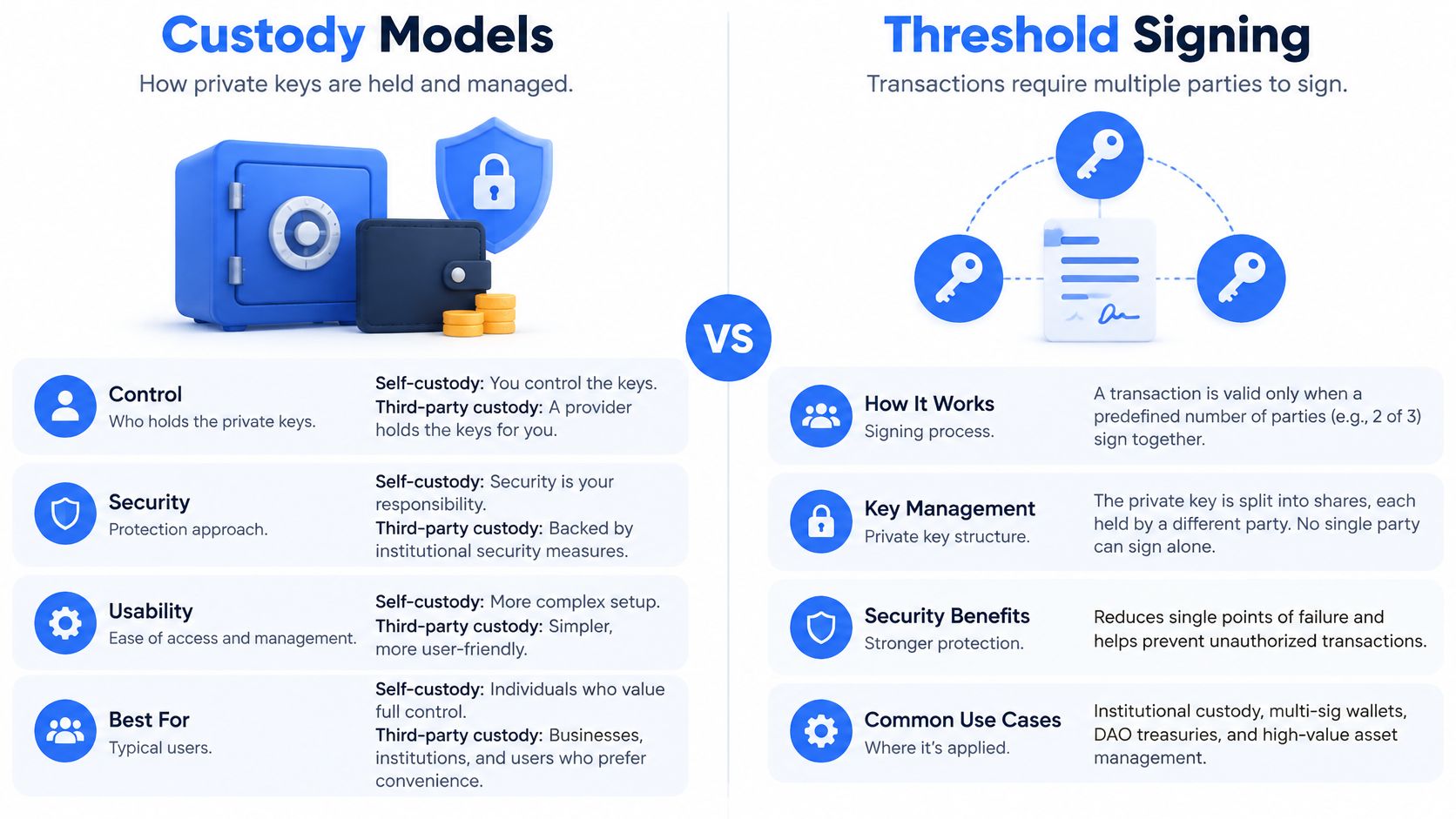
| Design | Parties needed | One share or key | If one required party is down | Main operating risk |
|---|---|---|---|---|
| Single server key | 1 | Full key is exposed | Signing stops | One host compromise takes the funds |
| On-chain multisig | M of N full keys | Each key is complete | Needs enough keys online | Visible, chain-specific and awkward to recover |
| Vendor-operated 2-of-3 | 2 of 3 | One share is not the key | Vendor may still sign | Vendor can be the effective custodian |
| Client Co-Signer 2-of-3 | 2, including the customer | One share is not the key | Signing stops | Customer must staff and recover that signer |
| 3-of-5 committee | 3 of 5 | One share is not the key | Two parties may be offline | Slower approvals and harder incidents |
A NIST presentation on threshold schemes is concrete on the 2-of-3 case. Two nodes must cooperate to sign, and one share is not the full secret. The claim is empty without party placement, distributed key generation, refresh, and a written rule for an offline signer.
What a client signer actually changes
BroSettlement is API wallet infrastructure with distributed key generation, MPC signing, network submission, and a Co-Signer under the customer's control across 10 networks. A withdrawal needs that independent path, so one compromised server or operator credential cannot finish the send alone. The control works only when policy is enforced before the ceremony and each signer is authenticated and audited. Read the placement questions the same way you would in a digital asset custody review. Who holds which share, and who can rotate it.
A client signer cuts unilateral vendor control. It also makes staffing, identity, and incident response your job.
Recovery is operations, not a backup checkbox. Name who may start it. Decide whether a signer can be rotated without rebuilding every wallet. Split emergency withdrawals from ordinary payouts. Set how long a freeze lasts, and which event proves the action. A 3-of-5 committee slows a bad send and also slows a Sunday incident. Pick the design whose failure you can staff.
Events Ledger and API Controls
A green WebSocket status is not a credit. Treat deposit.observed, deposit.confirmed, withdrawal updates, and policy outcomes as untrusted inputs until your service validates them.
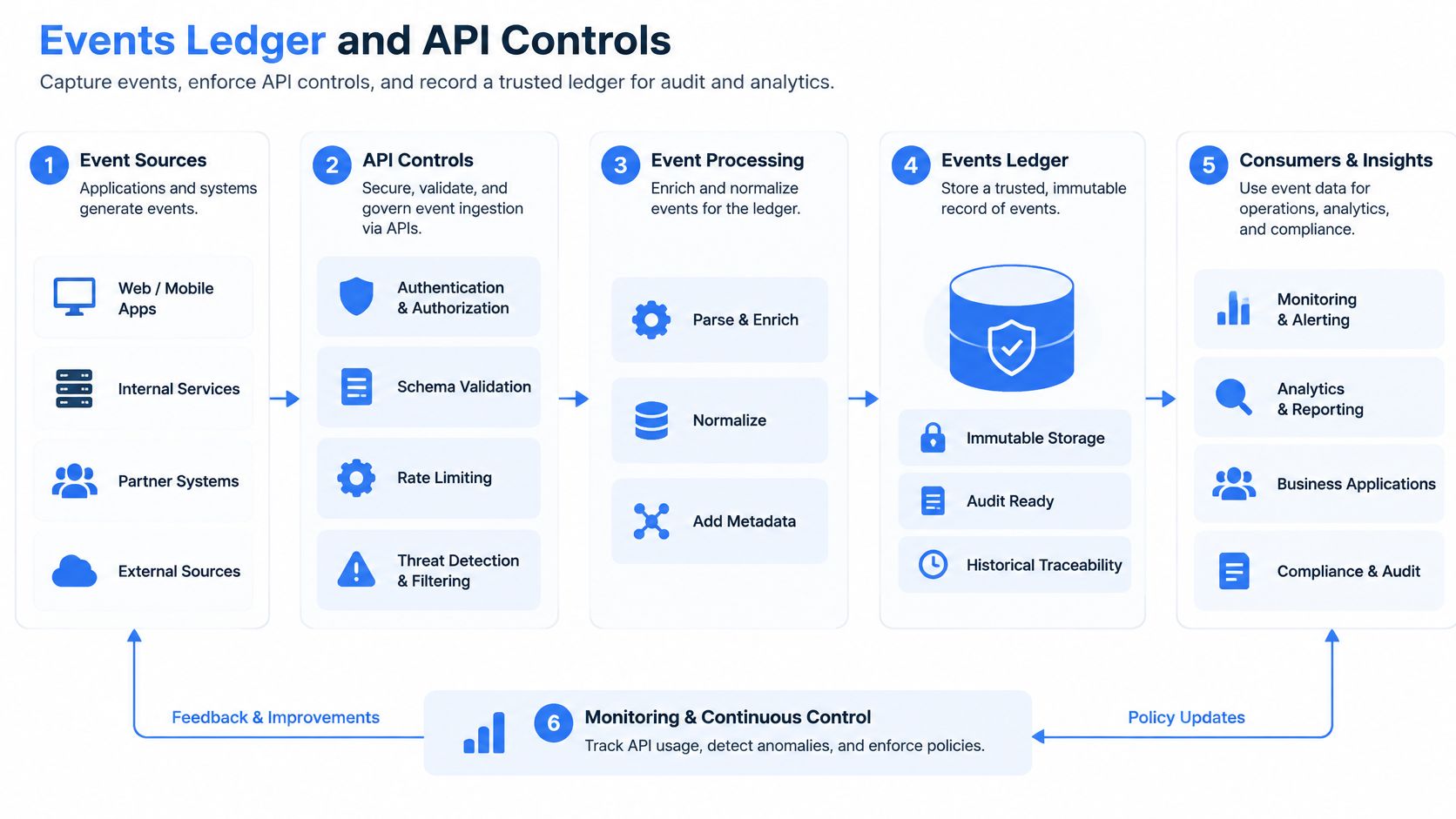
Validate external events with six checks: confirm sender identity and payload integrity, check timestamp freshness, resist replay, validate the schema, and enforce business rules. Apply them in order.
- Verify the sender. Reject payloads that fail Ed25519 authentication or the event signature.
- Check freshness and shape. Reject stale timestamps, invalid schemas, and events for the wrong network or asset.
- Deduplicate by event ID. Repeated delivery of the same deposit must not create another credit.
- Apply confirmation rules. An observed deposit is not confirmed. Public networks and providers can delay, reorder, reject, or change transaction status.
- Enforce policy before signing. A failed policy check must produce no signature.
- Write the ledger entry. Record the outcome only after the required checks pass.
What the log must hold
An operating log should preserve business history, not just transaction hashes. Record wallet or customer identity, asset, network, amount, timestamps, screening results, policy decisions, signing approvals, and broadcast outcomes. An append-only log and event feed support reconciliation and an audit workflow process.
BroLabel provides an operational log for wallets and transactions, plus REST API, Ed25519 authentication, and WebSocket events. Your team still owns the rules for confirming deposits, reconciling balances, and responding to incidents.
Use idempotency keys on create and payout requests so retries do not duplicate actions. Scope credentials so a deposit listener cannot authorize a withdrawal. Include fee metadata and clear transaction states, then alert on stalled requests and silent event streams. Apply the same discipline used for monitoring system health in DevOps.
Test the controls before launch: deliver one deposit event twice and confirm it creates one credit. Send a failed policy outcome and verify that no signing request proceeds.
Operating Models That Change the Choice
Do not rescore the whole vendor for every product. Each model has one failure and one fatal row.
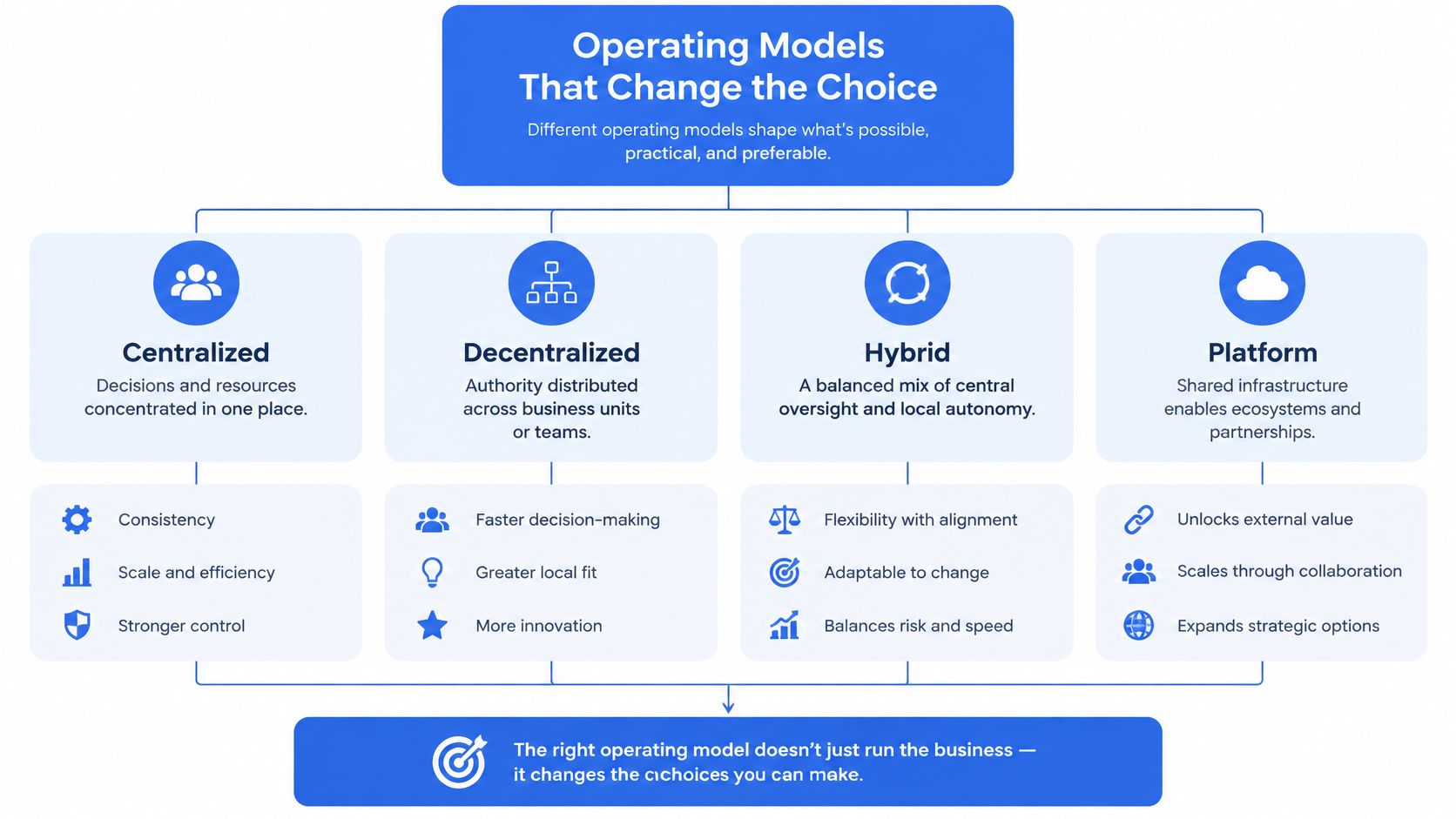
| Operating model | Failure to fear | Decisive control | Fatal scorecard row |
|---|---|---|---|
| Exchange or payment gateway | Stuck or underpriced transaction opens duplicate tickets and payout exposure | Fee estimate with target window and lifecycle states | Deposit and payout events |
| Neobank or fintech app | Embedded wallets outrun the product's own user model; fiat ramps stall | Product-side user model with provider-side wallet control | Fiat and cards |
| iGaming operator | Payout signed without operator policy; player-balance mismatch | Operator policy before signing and append-only log per player | Payout approval |
| AI agents | Agent signs without per-agent control or audit trail | Per-agent non-custodial control and audit trail, once generally available | Product availability |
An empirical study of 45,821 reviews from five leading mobile cryptocurrency wallets found 6,859 wallet-related UX reviews, with transfers stuck on fees that were too low and overpayment when fees ran high. For a gateway, require a fee estimate tied to a target confirmation window, plus submitted, pending, confirmed, and failed states. If those events are late, support opens a second ticket and treasury may pay twice. That is the fatal row, deposit and payout events.
A neobank that mints a wallet before the user record exists will not know whom to offboard. Keep the user model in your product. Fiat on and off ramps stay with the provider and the jurisdiction, so fiat and cards is the row that stops a launch.
Two patterns that are easy to oversell
For iGaming, the working pattern is a TRON USDT wallet and a TRC20 deposit address per player, deposit.observed and deposit.confirmed events, operator policy before a payout is signed, and an append-only log for player balances. That is not a custodial payment service provider. The fatal row is payout approval. The same policy habit belongs in crypto treasury management when a desk, not a player, is the beneficiary.
Agent wallets with MPC control and gas abstraction are in development. Design per-agent control and an audit trail now. Do not treat them as generally available. Product availability is the row that blocks a go-live date.
Risks to Control Before You Commit
A wallet provider's chain count and MPC label tell you little about how it will handle a compromised credential, a disputed transaction, or a failed dependency. Judge the provider by recovery governance, controls applied before signing, and the evidence available after an incident. Chainalysis reported that more than $2.17 billion had been stolen from cryptocurrency services by the end of June 2025, exceeding the full-year 2024 total. The report also attributed 23.35% of stolen-fund activity in that period to personal-wallet compromises. Ask how the provider detects and responds to failures, not whether it can promise zero incidents.
| Residual risk | Control | Evidence to demand |
|---|---|---|
| Wrong address, asset or amount | Customer checks before issuing instructions | Clear acceptance that blockchain transactions may be irreversible |
| Compromised operator credential | Policy enforced before signing | Logs showing unauthorized requests were rejected |
| Duplicate deposit or retry | Stored event IDs and idempotent writes | A replay test that creates no second credit |
| Reorg or dropped transaction | Observed-versus-confirmed rules | Written confirmation policy for each asset |
| Provider treated as the issuer | Contract boundary for balances and advice | Terms placing compliance decisions with the customer |
| Missing Travel Rule file | Records beyond the transaction hash | Export of available identity, screening, policy and approval fields |
Your team remains responsible for wallet addresses, network and asset selection, amounts, recipient data, transaction instructions, and its own compliance and risk decisions. Transactions may be irreversible. Technical infrastructure does not make the provider the issuer of your assets, your legal adviser, or the party responsible for end-user balances or your regulatory decisions.
Public blockchains, validators, token issuers, and independent providers can fail, delay, reject, or reorder transactions, and may change or cancel a visible transaction status. Set your own confirmation, reconciliation, and end-user servicing rules to account for these risks.
Require clear recovery governance, policy enforcement before signing, and an operational log your team can use to reconcile and audit transactions. Define who can suspend signing, who owns incident response, and what records remain available if a dependency fails. Apply website monitoring fundamentals to the services your wallet flow depends on. Do not approve a provider on slides alone; require evidence for each control.
Choose a Stack and Migrate Signing
A crypto wallet provider earns its place through clear signing control and records you can reconcile, not a long feature list. Choose a client-controlled modular stack when your team is early or scaling, volume is uncertain, and you need wallet infrastructure, transaction submission, events, and operational logs without stitching together multiple vendors. BroSettlement provides API-oriented MPC custody and embedded wallets. BroLabel engineers help design wallets, log records, signing policies, and events from start to finish.
Before committing, pin down the commercial terms. The subscription fee, included usage, limits, and overage rates are those shown during activation unless a signed Order Form states otherwise. BroLabel may change prices for future billing periods, but not retroactively for a completed period. Fiat on- and off-ramp integrations depend on the provider and jurisdiction. BroWallet and BroCard are separate products, not features included with BroSettlement.
Move signing in this order:
- Inventory current addresses, assets, and who can sign today.
- Define the payout policy and confirmation rule for each network.
- Set up the customer-controlled Co-Signer and assign its operators.
- Replay sandbox deposits, including duplicates, and reconcile them against the operational log.
- Move a capped production flow before retiring legacy payout keys.
- Export available records and keep the copies your business needs.
Do not migrate while key control, signing policy, or recovery governance remains unclear. Scope BroSettlement as infrastructure, then approve the move only when the signing path and reconciliation process are ready.
Questions Buyers Ask Before Going Live
Does non-custodial infrastructure remove licensing or Travel Rule duty? No. You still make compliance and risk decisions, and you still write servicing rules for delayed or reordered deposits. The API does not become your license.
Are BroWallet and BroCard included with BroSettlement? No. They are separate products. A website mention does not grant access, and their future features are not included in BroSettlement. Separate terms apply when they are available. BroCard remains in development and depends on the issuer, partners, and market, including the planned Mastercard and Apple Pay or Google Pay path.
What must the customer retain? You can export account and transaction information available through the app or the documented API. You must make and store the copies you need for accounting, compliance, and continuity. Our copy is not your books.
What should a recovery freeze cover that ordinary payouts do not? Name a separate initiator, a time limit, an independent approval, and an audit event. Test that path before go-live. If you still lack a signer owner, a confirmation rule, or an export path, go back to the migration sequence. Do not open a new vendor list.
BroLabel gives API-first teams embedded MPC wallets, a client-controlled Co-Signer, broadcast across supported networks, WebSocket events, and an operating log you can reconcile. If you are choosing a crypto wallet provider for payouts, player deposits, or treasury, start with policy before signing and an export you own. Visit BroLabel to scope BroSettlement against your signer, confirmation rules, and volume.