A treasury withdrawal is waiting for approval. Finance has confirmed the amount, compliance has checked the counterparty, and operations is watching the settlement queue. Then an API timeout occurs. One signer retries, another submits a partially signed transaction, and the ledger records an event before the blockchain confirms anything. The cryptography may be sound, but the operating system around it isn't.
That situation is the MPC vs multisig decision. The question isn't which method protects a private key better. It's which authorization model gives product, finance, operations, and compliance teams a reliable way to approve, broadcast, reconcile, recover, and audit asset movements.
The clear enemy is operational ambiguity. It appears when signing, policy evaluation, event processing, and accounting live in separate systems with unclear ownership. A secure signing ceremony can't compensate for duplicate withdrawals, missing Travel Rule data, or a reconciliation process that depends on someone comparing spreadsheets after the fact.
Table of Contents
- The Institutional Signing Dilemma
- Architectural Foundations of Distributed Authorization
- Evaluating Security Models and Threat Surfaces
- Integrating Compliance and API Resilience
- Matching Architecture to Operational Use Cases
- Implementing the Client-Controlled Co-Signer Pattern
- Frequently Asked Questions by Technical Buyers
The Institutional Signing Dilemma
An institutional wallet rarely exists in isolation. A customer initiates a withdrawal through an application, an internal policy engine checks the request, finance verifies the accounting treatment, compliance evaluates the counterparty, a signer or co-signer authorizes the transaction, and a broadcast service submits it to the network. Confirmation events then need to reach the ledger and the customer-facing product.
The signing architecture sits in the middle of that chain. If it creates a cumbersome approval flow, operations carries the cost. If it hides too much authorization logic, compliance and audit teams carry the cost. If it doesn't integrate cleanly with idempotent APIs and append-only records, finance carries the cost.
Teams often discover this after launch. A product may begin with modest, predictable treasury activity, then add embedded wallets, automated settlement, card funding, fiat withdrawals, or per-user payment flows. The original custody arrangement becomes a constraint because every new workflow has to pass through the same rigid approval process.
A practical custody review should therefore ask:
- Who can request a transaction? The answer should be tied to application roles, not merely to possession of a key or share.
- Who can approve it? Approval should reflect amount, asset, destination, customer, and risk context.
- What happens when the network fails? A retry must not create a second withdrawal or a second signing attempt.
- What does finance reconcile? The ledger needs durable states for requested, approved, signed, broadcast, confirmed, rejected, and failed operations.
- What can an auditor prove? The system should preserve the policy decision, participants, timestamps, event identifiers, and final transaction reference.
| Decision area | Multisig | MPC |
|---|---|---|
| Authorization location | On-chain script or smart contract logic | Distributed computation before broadcast |
| Transaction appearance | Multiple signatures or explicit spending conditions may be visible | Standard single-signature transaction |
| Main operational strength | Transparent quorum enforcement | Flexible signing across compatible chains |
| Main operational burden | Coordinating independent signers and partially signed transactions | Operating and reviewing complex threshold-signing infrastructure |
| Best starting question | Do stakeholders need publicly verifiable approval rules? | Does the product need a standard transaction and flexible execution layer? |
The digital asset custody guidance is useful background for teams documenting these responsibilities. The central lesson is straightforward: choose the signing model together with the operating model. A wallet that secures assets but complicates reconciliation is only partially solving the custody problem.
Architectural Foundations of Distributed Authorization
Multisig and MPC both distribute authorization, but they distribute it in different places.
Bitcoin's scripting system supported conditions that required multiple private keys. Pay-to-Script-Hash, formalized through BIP16, made those conditions easier to use in ordinary transactions. A typical policy is 2-of-3, where any two of three independent keys must authorize a spend. BitGo launched the first widely recognized multisignature wallet in August 2013, and companies including BitPay, Circle, Coinbase, CoinKite, Armory, and GreenAddress adopted the model during the following year. By the end of 2014, the share of bitcoins secured with multisignature arrangements had risen from 0.02% at the beginning of the year to more than 5% in December, while daily multisignature transactions had increased 79-fold over the preceding year, as reported by CoinDesk's historical account of multisig adoption.
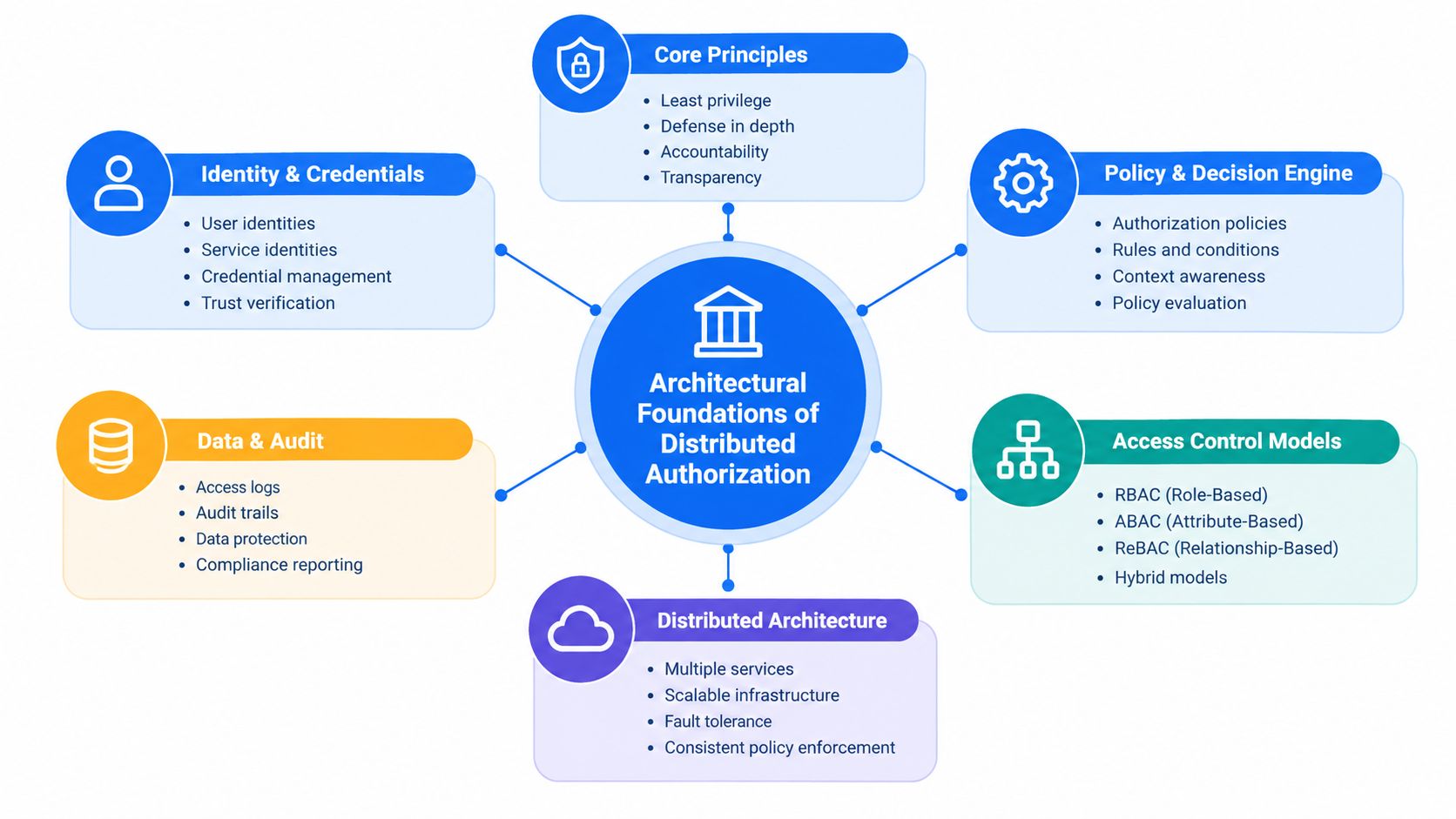
Multisig makes the quorum a blockchain rule
In native Bitcoin multisig, m represents the minimum number of signatures required and n represents the number of supplied public keys. A 2-of-3 arrangement records three public keys in the spending condition and requires two corresponding signatures before the transaction can be validated. The blockchain script enforces that threshold.
That visibility is valuable. An observer can inspect the transaction structure and understand that authorization required a defined quorum. The trade-off is that key holders generally need to coordinate a partially signed transaction. The transaction moves between relevant parties until it reaches the required threshold, which creates workflow and handoff requirements for treasury and operations teams.
Multisig is therefore more than a key-management choice. It's an account and governance model. The chain, protocol, or smart contract becomes part of the control plane.
MPC keeps authorization in distributed computation
Secure multiparty computation research dates to the early 1980s. Threshold-signature work developed through proposals in the 1990s, two-party protocols in the 2000s, and more practical protocols in the 2010s. A cited milestone is Lindell's practical two-party protocol from 2017, followed by multiparty extensions in 2018, as described in the threshold-signature survey.
MPC uses secret sharing and distributed computation so participants can collaborate on a signature without reconstructing or revealing the complete private key. The result is a compatible signature that can be submitted as a standard transaction. The chain sees the output signature, not a multisignature policy containing the individual participants.
That distinction affects privacy, chain compatibility, recovery procedures, and audit evidence. MPC doesn't make authorization disappear. It moves the threshold decision into cryptographic protocols and the systems operating them.
For teams translating these controls into an audit program, a resource on SOC 2 audit access controls can help connect technical authorization decisions with access governance and evidence collection. Teams evaluating implementation details can also review multi-party computation infrastructure as a product architecture rather than treating MPC as an isolated cryptographic component.
Evaluating Security Models and Threat Surfaces
Neither model removes risk. Each changes where risk is concentrated, how teams observe it, and what recovery looks like.
With multisig, each signer generally controls an independent private key. A compromised signer doesn't automatically satisfy a 2-of-3 policy, but that key remains a complete signing credential. The organization must protect every key, maintain signer independence, coordinate approvals, and plan for loss or unavailability.
With MPC, participants hold key shares and collaborate to produce a signature without reconstructing the complete key. A single share isn't intended to authorize a transaction by itself. The security model depends heavily on the threshold protocol, implementation quality, participant isolation, backup design, and availability of the signing infrastructure.
Decision matrix
MPC vs Multisig Infrastructure Matrix
| Evaluation Criteria | Multisignature (Multisig) | Multiparty Computation (MPC) |
|---|---|---|
| Quorum enforcement | Enforced by a blockchain script or smart contract | Enforced through distributed signing computation |
| Key material | Multiple independent private keys | Distributed key shares intended to avoid complete-key reconstruction |
| On-chain representation | Public keys and the m-of-n spending condition can be visible | Standard signature output, without a multisig policy in the transaction |
| Chain compatibility | Depends on native scripting or smart-contract support | Designed to produce signatures accepted by supported chains |
| Transaction footprint | Can expose multiple signatures or complex spending conditions | Resembles a standard single-signature transaction |
| Coordination | Partially signed transactions move among key holders | Signing participants coordinate through a protocol |
| Recovery | Requires a documented replacement, backup, or migration process for lost keys | Requires share backup, refresh, replacement, and protocol recovery procedures |
| Audit model | Quorum and approval structure can be inspected on-chain | Authorization evidence must be retained in off-chain systems |
| Primary failure surface | Lost keys, signer coordination, misconfigured thresholds, and signer compromise | Protocol defects, infrastructure outages, share compromise, and weak operational controls |
| Governance fit | Strong when stakeholders need visible, deterministic approval rules | Strong when execution flexibility and standard transactions matter |
The practical difference is not “transparent versus secure.” It's where the organization must create evidence and controls. Multisig exposes more of the policy at the transaction layer, while MPC requires the operator to preserve reliable records of policy evaluation, participants, protocol status, and signing outcomes.
A team running a Bitcoin treasury with a stable signer group may value native multisig because the rule is explicit and the transaction structure is familiar. A team operating user wallets across several networks may prefer MPC because the application can keep a consistent signing interface while the underlying network transaction remains standard.
Recovery deserves special attention. A lost multisig key can block the threshold or require a wallet migration, depending on the policy and available backups. A lost MPC share can also interrupt signing, even though the full key was never held in one place. Share refresh and replacement don't eliminate the need for tested recovery procedures.
Practical rule: Treat recovery as a production transaction path. Test who initiates it, who approves it, what evidence is retained, and how the ledger records the transition.
For a Bitcoin-specific treatment of policy design and wallet operations, see the multisig Bitcoin wallet guide. The right choice depends less on labels and more on whether the organization can operate the corresponding threat and recovery model consistently.
Integrating Compliance and API Resilience
A signing request should never be the first control in a regulated withdrawal flow. The application needs to decide whether a withdrawal is permitted before any threshold-signing process authorizes broadcast.
FATF Recommendation 16 requires virtual asset service providers to obtain, hold, and transmit required originator and beneficiary information immediately and securely when conducting covered virtual asset transfers, according to FATF guidance on virtual assets and VASPs. Regulatory implementation can vary, and related guidance cites a USD/EUR 1,000 threshold for covered transfers between obliged entities such as two VASPs or a VASP and a traditional financial institution.
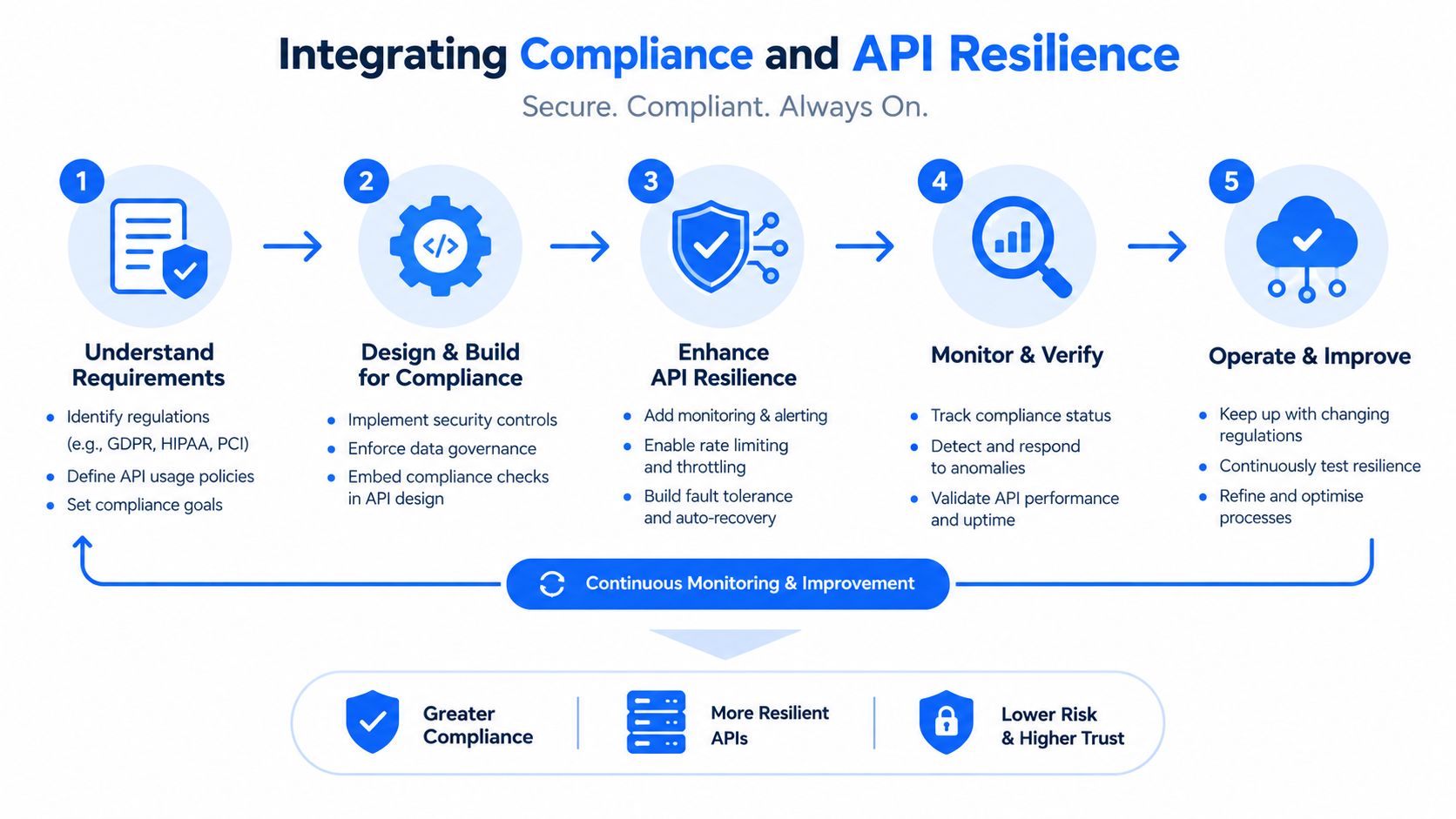
Put policy before signing
A withdrawal flow separates business authorization from cryptographic authorization.
- Accept the command. Validate the authenticated caller, scoped API key, asset, network, amount, destination, and durable idempotency key.
- Create the ledger intent. Record the requested operation before invoking a signing service. The record should have a stable internal identifier and an explicit state.
- Evaluate policy. Check customer status, sanctions exposure, jurisdiction, transaction limits, originator and beneficiary data, and required approval roles.
- Authorize signing. Only an approved request enters the MPC or multisig workflow. Rejected requests must not reach a signer.
- Broadcast and reconcile. Store the signed transaction reference, broadcast result, confirmation events, and final ledger state.
Replay protection and idempotency solve different problems. Replay protection uses a unique, preferably unpredictable nonce with a timestamp or validity window. The server records accepted nonces and rejects reused or expired requests. Idempotency keys handle legitimate retries after a timeout or network failure by associating repeated submissions with the same operation.
The same discipline must apply to events. Deposit and confirmation consumers should persist processed event identifiers before acknowledging work. That protects the operating ledger when a WebSocket reconnects, an API response is delayed, or a worker restarts.
Build observability into the settlement path
WebSocket events should be treated as delivery mechanisms, not as the ledger itself. The consumer needs durable event handling, replay or recovery logic, and reconciliation against authoritative transaction state. A withdrawal that is “signed” but not “broadcast” must remain distinct from one that is “broadcast” but not “confirmed.”
Teams reviewing the application layer may find a practical reference in these top 10 API security best practices for. The key buyer question is whether the provider exposes enough event and policy detail for engineering, finance, and compliance teams to investigate a failed operation without guessing.
Matching Architecture to Operational Use Cases
The strongest architecture depends on what the wallet is doing, not on which technology is more fashionable.
Consider an iGaming platform that provisions a deposit address for each player and receives frequent stablecoin activity. The product needs deposit observation, confirmation events, player attribution, payout controls, and a ledger that can distinguish an observed deposit from a settled balance. The signing layer is only one component. The platform also needs an operator policy before a payout is approved, especially when the destination, customer status, or compliance context changes.
An MPC execution layer can fit this pattern when the business needs standard transactions, automated workflows, and a consistent API across supported networks. The platform can keep per-player wallet identities and application-level controls separate from the signing protocol. That doesn't remove the need for approval rules. It makes the rules explicit in the surrounding policy and ledger services.
A treasury team has a different problem. It may prioritize visible quorum rules, clear stakeholder approval, and publicly inspectable execution. Native Bitcoin multisig can be a strong fit when the asset, chain, signer group, and governance process are stable. The team must still document backups, signer replacement, transaction coordination, and emergency recovery.
Use the operating profile as the filter
| Operating requirement | Likely preference | Reason |
|---|---|---|
| Publicly verifiable treasury approvals | Multisig | The quorum can be represented in the on-chain spending policy |
| Automated customer or player flows | MPC | Standard signature output can fit an application-driven execution path |
| Stable signer group on a supported chain | Multisig | The policy is direct and easier for stakeholders to inspect |
| Multiple networks and changing product workflows | MPC | The application can use a consistent signing interface where supported |
| Governance that must be visible to external stakeholders | Multisig | Approval structure is represented at the account or transaction layer |
| High operational dependence on APIs and event streams | Either, with strong controls | Signing architecture doesn't replace idempotency, policy, or reconciliation |
AI Agents add another dimension. An autonomous agent should not receive unrestricted wallet authority because it needs to pay for a service or execute a task. The application should provision a non-custodial wallet per agent, apply role-based access control, define permitted actions, and preserve an audit trail that connects the agent decision to the resulting transaction.
An agent wallet may use MPC for distributed signing, while the control plane limits destinations, assets, transaction types, and approval conditions. A multisig arrangement may suit an agent that operates under a visible human or organizational quorum. The decision turns on whether the agent needs automated execution, stakeholder-visible authorization, or both.
The practical lesson is to map each wallet to a business role before mapping it to a signing technology.
Implementing the Client-Controlled Co-Signer Pattern
Teams shipping before volume is predictable need a custody pattern that avoids both extremes. A fully centralized signing service concentrates operational authority. A rigid multi-party setup can make product iteration, recovery, and integration harder than necessary.
A client-controlled Co-Signer creates a useful middle ground. In a 2-of-3 MPC design, the client holds one share, the infrastructure provider holds another, and a separate recovery or control component holds the remaining share according to the deployment model. Any two shares can authorize a transaction, while one share alone can't complete the signing process.
The client-controlled element matters because the customer can deploy and operate the co-signer in its own environment. The provider can supply the signing protocol and transaction infrastructure without becoming the sole authority over asset movement. This supports a non-custodial operating model, provided the customer controls its share, access policies, deployment permissions, and recovery procedures.
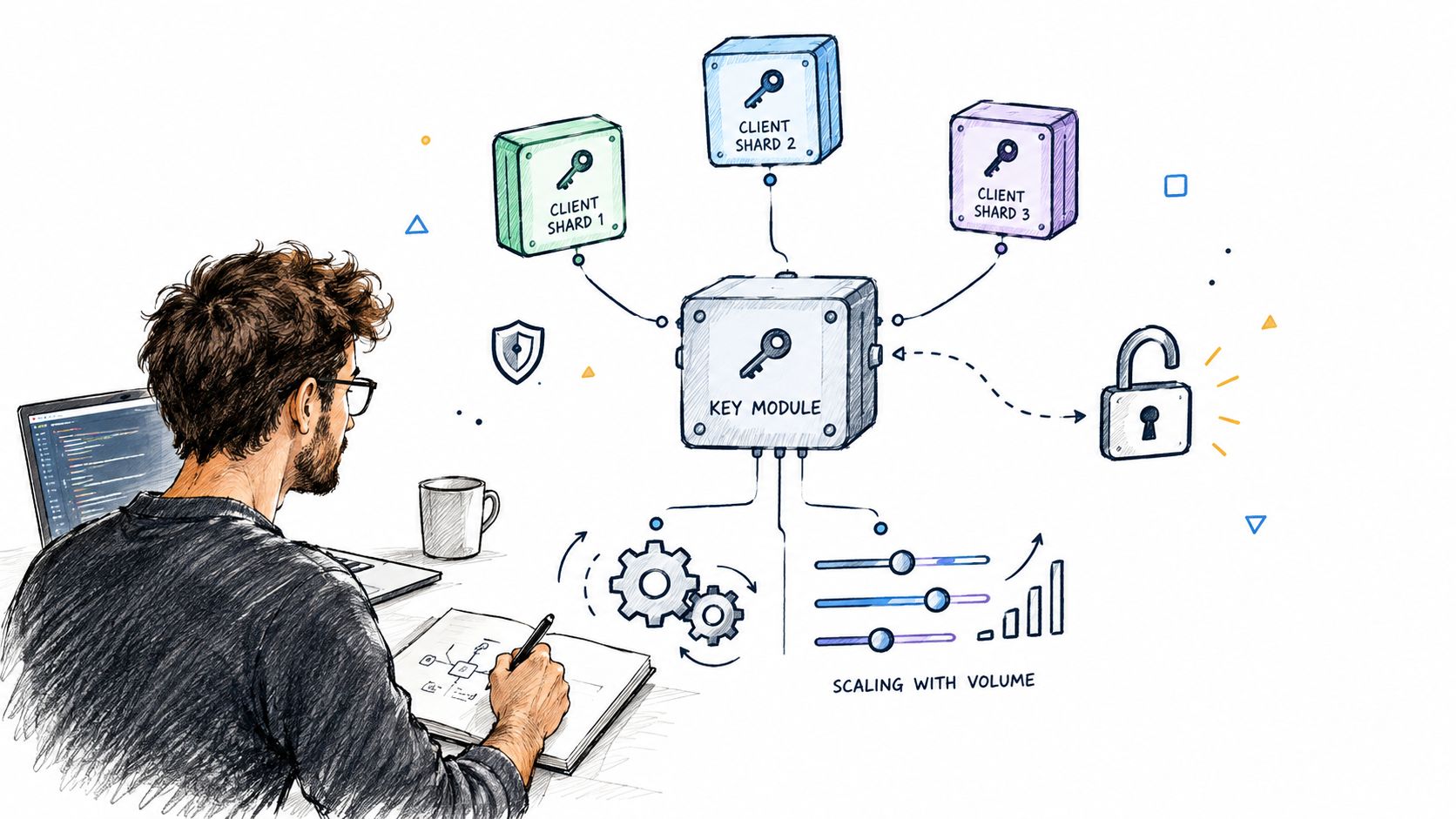
Keep the control plane separate
The co-signer should not be treated as an approval policy by itself. The application still needs scoped API keys, role-based access controls, destination rules, sanctions screening, approval queues, and an append-only operating ledger.
A sound flow looks like this:
- Product creates the request: The wallet or settlement API records the intended operation and its idempotency key.
- Policy evaluates the request: Compliance, finance, and risk rules determine whether the withdrawal can proceed.
- The client-controlled co-signer participates: The customer's environment approves or rejects the signing session according to its own controls.
- The signing service completes the threshold: The MPC protocol produces the compatible signature without reconstructing the complete private key.
- Events update the operating record: WebSocket messages identify deposit, confirmation, withdrawal, and policy outcomes, while consumers protect against duplicate processing.
This modular structure lets a team embed wallets for users, players, or AI Agents while keeping wallet balances, fiat integrations, card flows, and settlement operations connected to the same control model. A product such as BroSettlement can provide DKG and MPC 2-of-3 signing with a client-controlled Co-Signer, while BroWallet can support wallet, exchange, bank, and card interactions as part of a broader application flow.
The pattern works only if the customer owns the operational discipline. Test co-signer availability, revoke compromised credentials, rehearse share recovery, review policy changes, and reconcile every signing outcome against the ledger. Distributed authorization reduces concentrated key risk, but it doesn't excuse weak access management or undocumented exception handling.
Frequently Asked Questions by Technical Buyers
Is MPC safer than multisig?
Neither is automatically safer. Multisig makes the quorum visible and enforces it in the blockchain script or smart contract. MPC distributes signing authority through key shares and produces a standard signature. The safer choice depends on the threat model, implementation quality, recovery design, chain requirements, and the organization's ability to operate the controls.
Does multisig provide better auditability?
It provides stronger on-chain visibility into the spending condition and, depending on the implementation, the signatures or approval structure. MPC requires the organization to preserve off-chain evidence of policy evaluation, signing participants, protocol outcomes, and transaction decisions. Auditability is therefore a system-design responsibility in both models.
Can an organization migrate from multisig to MPC?
Yes, but migration should be treated as a controlled asset and policy transition. Inventory balances, destinations, signer roles, approval rules, and reconciliation dependencies. Create the new wallet or signing relationship, test deposits and withdrawals in a controlled environment, execute the approved asset transfer, and retain a clear link between the old and new records.
How should teams handle signing latency?
Measure the complete workflow, not just cryptographic computation. Include policy evaluation, co-signer availability, approval queues, API retries, broadcast response, and confirmation processing. A fast signature doesn't help if compliance review or event reconciliation creates the actual delay.
What makes a ledger suitable for reconciliation?
Use an append-only operating ledger with stable operation identifiers and explicit state transitions. Record the original command, idempotency key, policy outcome, signing result, broadcast response, confirmation events, and any exception or reversal. Finance should be able to reconcile the ledger against network activity without relying on transient WebSocket messages.
Should AI Agents use their own wallets?
They should have narrowly scoped wallets and permissions rather than unrestricted access to a shared treasury. Apply role-based controls, destination restrictions, spending policies, human escalation paths, and durable audit trails. The signing architecture supports those controls, but the application must define and enforce them.
BroLabel provides API-first infrastructure for embedded MPC wallets, client-controlled Co-Signing, settlement, network broadcast, an append-only operating ledger, WebSocket events, cards, and fiat workflows. If your team needs to connect signing architecture with compliance, idempotency, and reconciliation, explore BroLabel and assess the path from sandbox testing to production operations.