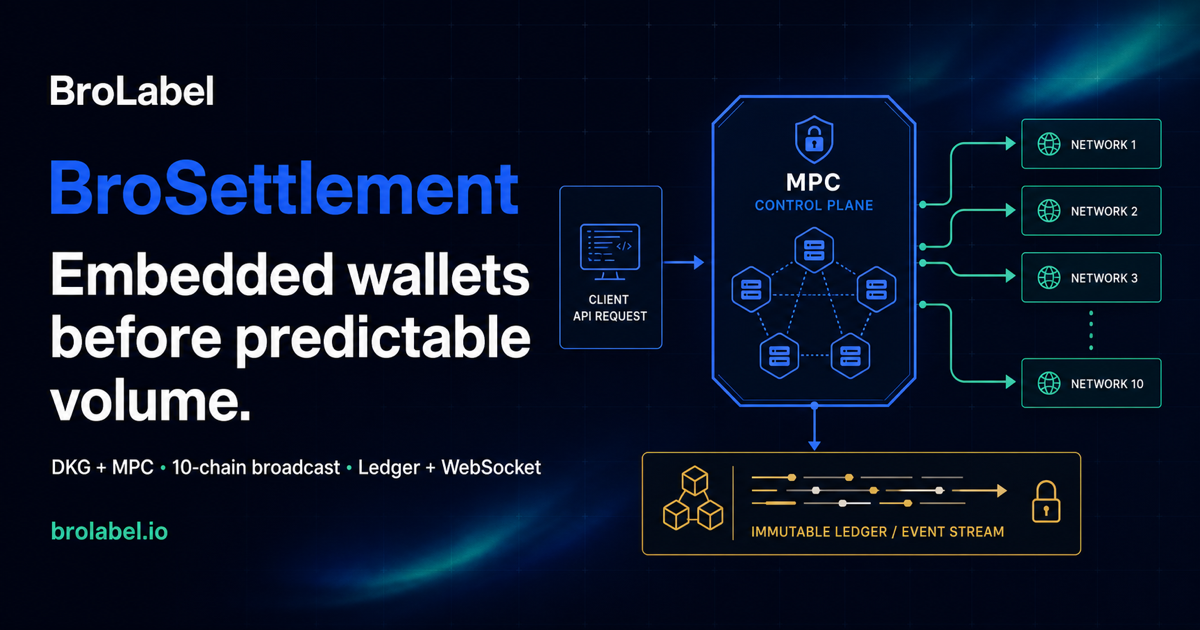
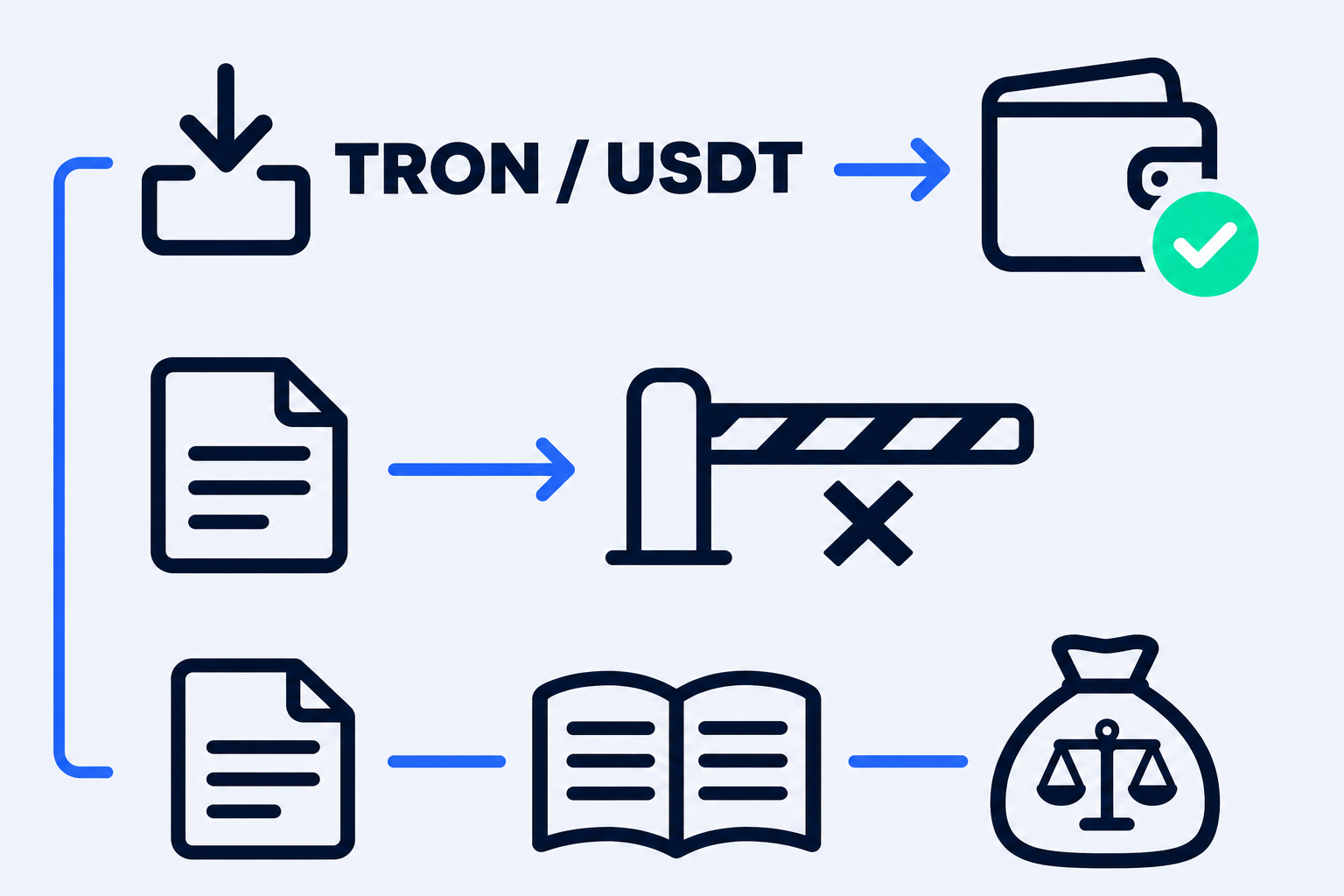
A TRON USDT wallet API pilot should prove three things before you expand the integration. One deposit reaches the intended customer account, one payout is stopped by the configured approval rule before signing, and your operations team can explain the resulting balance from transaction and ledger records. Agree on the expected evidence for all three checks before the first transfer.
If you are still building a shortlist, start with the crypto wallet API comparison. Once you have a candidate, use this plan to decide whether the integration is ready for a wider trial.
Set up one wallet and one approval rule
Use a dedicated pilot account and wallet, a controlled TRON deposit address mapped to one test customer, and a sender and recipient controlled by the pilot team. Agree on the deposit amount, payout amount, starting balances, observation window, and expected balance effects. For the rejection test, make the payout otherwise valid, with sufficient funds, and choose one Co-Signer rule that this request will deliberately fail. Verify the rule, the rejection evidence, and the deposit confirmation criterion against the active contract and pilot account configuration. Use an approved environment that supports the required flow. If the test requires a real transfer, agree on the amount and exposure before starting.
Take an opening balance snapshot before sending funds. Keep unrelated wallet activity out of the test window and record the account, wallet, network, asset, and timestamps. Assign one person to run the test and another to review the evidence.
For the approval and signing steps, see how to approve USDT payouts on TRON.
Acceptance matrix
| Check | Run | Pass when | Save as evidence |
|---|---|---|---|
| One TRON USDT deposit | Send one controlled transfer to the mapped deposit address. Track it through the agreed confirmation criterion. | The transaction is a DEPOSIT for the intended account and wallet. Once the agreed criterion is met, the API shows CONFIRMED and the application credits the intended customer exactly once for the expected USDT amount. | Deposit transaction ID, on-chain hash, confirmation evidence, wallet and account IDs, amountAtomic, and the application credit record. |
| One payout denied by policy | Submit the otherwise valid request that violates the chosen Co-Signer rule. Observe the decision and check for signing and broadcast evidence during the agreed window. | The recorded decision identifies the intended rule and shows the request was stopped before routine A+B signing. The run produces no evidence of broadcast, and reconciliation shows no final debit attributable to the payout. | Request reference, rule decision, signing and broadcast checks, and a transaction ID if the environment creates one. |
| Reconcile with the ledger | Read the deposit and its related wallet ledger entries. If the payout has a transaction record, read its related entries too. Compare the posted effects with your own records and the closing balance. | The confirmed deposit is traceable from the chain to the transaction, ledger, and customer credit. Every posted effect in scope is explained, including any applicable recorded fees. Any temporary payout effects are resolved under the agreed rules, and the closing balance matches the opening balance plus the net posted effects. | Transaction and ledger entry IDs, amounts and directions, opening and closing balances, and a reconciliation note. |
Read the transaction and its ledger effects
In BroSettlement, use GET /api/v1/transactions with transactions:read to find the deposit by txHash. When a payout reference was supplied and recorded, search with clientReference and narrow the results by account or wallet as needed. Read each transaction you identify with GET /api/v1/transactions/{id}. Record the id, accountId, walletId, chain, asset, type, status, and amountAtomic. balanceEffects and onChainDetails can depend on the state of the transaction. For the deposit procedure, see the TRON USDT deposit integration guide.
Use GET /api/v1/wallets/{walletId}/ledger-entries with wallets:read and filter by transactionId where available. Check each entry’s direction, status, asset, and amountAtomic. Work in atomic units and apply the direction of each POSTED entry when calculating the net change for the pilot wallet and asset. Record PENDING and VOIDED entries separately. Compare the result with the application’s customer credit and closing balance. Production OpenAPI · Ledger reference
Decide whether to expand the pilot
Mark each row pass, fail, or inconclusive. A wrong customer credit, an unexplained posted effect, or evidence that the rejected request reached signing or broadcast fails the relevant check. Missing rule evidence or a deposit still awaiting the agreed confirmation criterion leaves the check inconclusive. Expand to more wallets or assets once all three checks pass and the reviewer can reproduce the reconciliation from the saved records.
FAQ
Which API status proves that a payout was denied by the rule?
Use the recorded policy decision and the signing and broadcast evidence available in your environment. The BroSettlement transaction status list contains PENDING, CONFIRMED, FAILED, and FAILED_ON_CHAIN. A FAILED status alone does not identify the rule that stopped the request. Verify the rejection response and whether a transaction record is created under your active contract.
How many TRON confirmations should the pilot require?
Use the confirmation and credit conditions configured for the pilot account under its active API contract. Record the condition before sending funds so the reviewer can tell when the deposit check is complete.